
 EN
EN


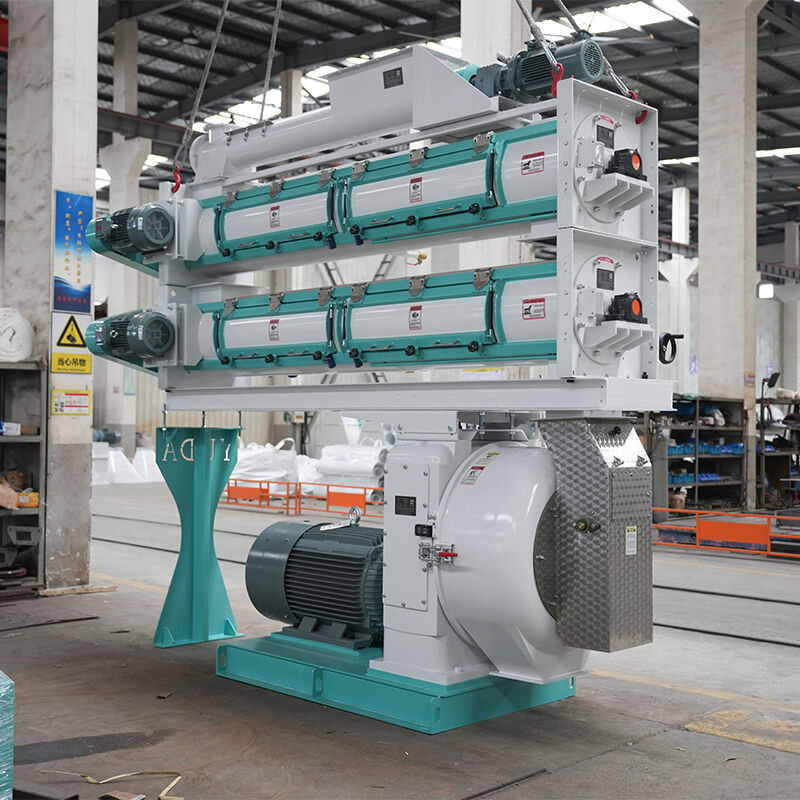
Investing in a high-quality feed pellet machine is the first step. To ensure that you get maximum yield and that your poultry gets the quality and constant nutrition, you need to understand how it works. The most advanced granulating equipment can fail to serve its purpose if the most essential factors are not taken into account.
At Shanghai Yuanyuda International Trade Co., Ltd we not only sell machines but also provide professional knowledge to optimize your production operations.These are the five key factors that directly affect the operation of your animal feed pellet machine.
Raw Material Characteristics and Preparation
Effective pelletization depends on the composition and quality of the raw materials. Different raw material components behave in different ways when subjected to the pressure and heat of the pelletizing process.
Moisture Content: Raw materials that are too dry will not bind together, hence forming weak, dusty pellets. If raw materials are too wet, they can clog the die to such an extent that production is halted. With the use of reliable drying or cooling equipment, your raw materials can be adjusted to the optimal moisture content before being transferred to the main granulator.
Particle Size: Here your Grinding equipment comes into the picture. When the blades of the hammer mill are dull or the screen plates are worn, the particle size will lack uniformity. Ideally, all raw materials should be ground to a consistent particle size. Oversized particles cause excessive wear on Roller Shells and Ring Dies and require more energy for compression.
Cleaning: Foreign contaminants such as stones and metal fragments are the main cause of reduced operational efficiency. Properly installed cleaning equipment before the grinder and mixer prevents catastrophic damage to the machine’s expensive components (including Spindles and Hollow Shafts) and avoids unnecessary production downtime.
Die Specifications and Condition
The Ring Die is the most significant component of your pellet mill. The Ring Die’s condition and specifications directly determine pellet throughput and quality, which is why it is the most critical component of a pellet mill.
Die Thickness (L/D Ratio): This ratio refers to the Ring Die’s working length relative to the diameter of its holes. The L/D ratio should be matched to your specific feed formula. An excessively high L/D ratio for your raw materials will create excessive friction, which slows down production and causes unnecessary energy waste. Conversely, an excessively low L/D ratio will result in poor pellet quality.
Die Wear: The Ring Die wears out over time as its surface becomes polished and it eventually loses its roundness.This reduces friction, causing slipping between the Roller Shells and the Ring Die and significantly lowering operational efficiency. To maintain the machine’s rated capacity, inspect the Ring Die regularly and replace it when worn.
Roller Adjustment and Shell Condition
The feed is conveyed through the rollers, which are driven by the Ring Die. The rollers must be properly aligned; otherwise, operational efficiency is reduced.
Clearance: This is the gap between die and roller shell. An excessively thick feed bed forms when the clearance is too wide, and the rollers cannot effectively extrude the feed. If the clearance is too narrow, there is a risk of metal-to-metal contact, which causes deformation of the Roller Shells and the Ring Die’s surface.
Shell Wear: Worn Roller Shells become smooth and lose their corrugations. Smooth Roller Shells lack the ability to effectively grip the raw material, leading to slippage and reduced production output. When replacing Roller Shells, it is recommended to replace them along with the Ring Die to ensure optimal traction and operational performance.
Conditioning and Heat Management
To ensure efficient production, it is necessary to properly condition the mash, which is injected with steam and thoroughly mixed. This process involves the gelatinization of starch, a natural binding agent that also lubricates the raw material.
Steam Quality: Steam quality must be strictly controlled; otherwise, the extruder and pellet mill will have to work harder, drawing more electrical current and experiencing accelerated wear. Properly designed mixing equipment ensures uniform steam distribution throughout the mash.
Post-Pellet Cooling: Hot, soft pellets are highly prone to breakage. These pellets are stabilized via a rapid cooling process with efficient equipment such as counterflow coolers, allowing for safe handling and transportation without breakage. Reduced pellet breakage results in more marketable and usable feed pellets.
Maintenance of Drive Components and Conveyance
Operational efficiency is not limited to the pelleting chamber but also depends on the entire system operating as a single, coordinated unit.
Drive Train: This system consists of the main motor, gearbox, and bearings, which serve to transmit power to the Ring Die. Worn bearings, misaligned Spindles, or offset Hollow Shafts cause excessive friction and drag, robbing the system of power that should be directed to the pelleting process. Routine greasing and alignment checks are also essential for optimal performance.
Flow of Material: Your conveying equipment (screw conveyors, bucket elevators) must deliver a consistent flow of raw material to the conditioner and pellet mill. Erratic or intermittent material feed forces the pellet mill to constantly adjust its operation, leading to inefficient performance and inconsistent pellet quality. Additionally, sifting equipment installed after the cooler removes fine particles, separating high-quality pellets for bagging; the removed fines can then be recycled for reprocessing.
By paying close attention to these five critical areas—including hammer mill blades and screen plates, post-pellet cooling, and material conveyance—you can significantly boost the efficiency of your feed production line. Shanghai Yuanyuda International Trade Co., Ltd. offers tailor-made solutions for wear parts compatible with both domestic and international pellet mill models, ensuring your machines operate at their optimal capacity regardless of the original manufacturer.