
 EN
EN


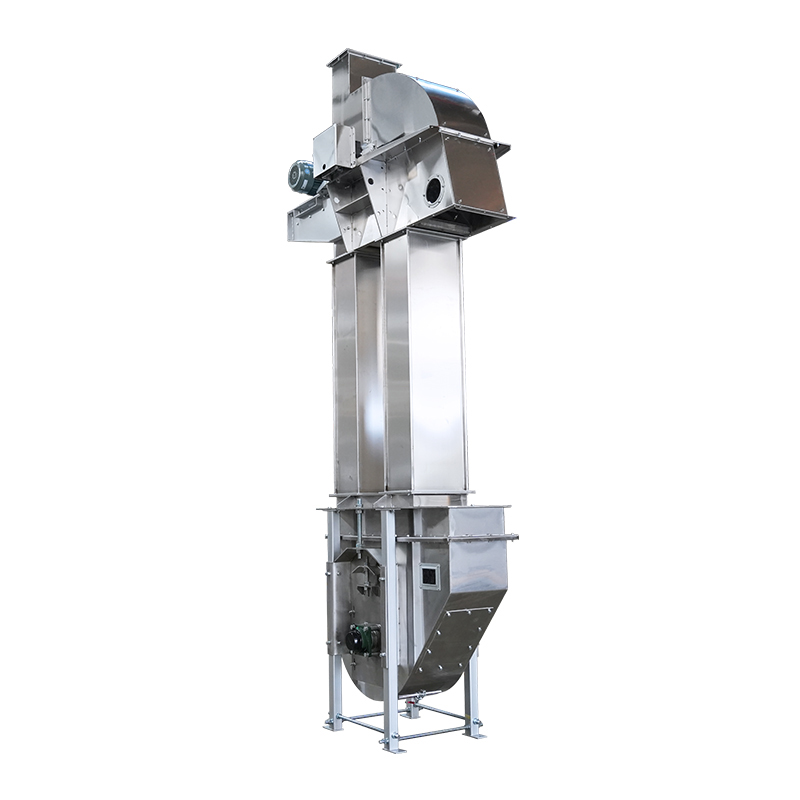
How to Prevent Material Damage During Bucket Elevator Conveying
Quick Answer
To prevent material damage during bucket elevator conveying, manufacturers should optimize five key factors:
1. Use a suitable bucket design for fragile materials.
2. Control elevator speed according to material characteristics and conveying capacity.
3. Optimize feeding and discharge structures to reduce impact.
4. Reduce material backflow and unnecessary repeated conveying.
5. Maintain belt tension, alignment and other critical components.
What Is a Bucket Elevator and Why Does Material Damage Occur?
A bucket elevator is a vertical conveying machine used in feed mills and grain processing plants to transport bulk materials between different production stages. Proper bucket elevator design is especially important for fragile materials such as feed pellets, corn and wheat. For fragile materials, a low speed bucket elevator is often preferred because controlled conveying can reduce unnecessary impact during loading and discharge.
Meta Title: How to Prevent Material Damage During Bucket Elevator Conveying
Meta Description: Learn how proper bucket design, feeding method, operating speed, discharge structure and maintenance measures can reduce pellet cracking, kernel breakage and increased fines during bucket elevator conveying.
Primary Keyword: Bucket Elevator
Secondary Keywords: bucket elevator material damage, feed pellet bucket elevator, grain bucket elevator, bucket elevator design, bucket elevator speed, bucket elevator discharge, bucket elevator chute design
How to Prevent Material Damage During Bucket Elevator Conveying
Bucket elevators (vertical conveying equipment) are widely used in feed mills, grain processing plants, fertilizer plants and other bulk material handling industries to provide vertical conveying of materials. As one of the core machines in grain and feed conveyor systems, a bucket elevator can efficiently lift materials to a specified height while occupying less floor space.
However, for fragile materials such as feed pellets, grain, seeds and other granular products, conveying efficiency is not the only factor to consider. If the feeding method is unreasonable, the lifting speed is too high, the bucket design is unsuitable, the discharge conditions are poor, or material backflow occurs, the following problems may result:
Feed pellet cracking
Kernel breakage
Material surface damage
Increased fines
Increased material loss
For feed producers, these problems can directly affect the quality of the final product and increase material loss during production.
Therefore, the design and operation of a bucket elevator should strike a balance between conveying capacity, equipment operating efficiency and material integrity.
This article explains the main causes of material damage in bucket elevator conveying and how to reduce such damage through sound engineering design, operating parameters and maintenance measures.
What Types of Material Damage Can Occur During Bucket Elevator Conveying
Different materials have different sensitivities to impact, friction, compression and repeated conveying.
In feed and grain conveying, the more common types of material damage mainly include the following.
Feed pellet cracking
When feed pellets are subjected to excessive impact during feeding, lifting or discharge, pellet cracking may occur.
Cracked pellets are more likely to generate additional fines during subsequent transport and handling.
This is especially important in the production of poultry feed, pig feed and cattle/sheep feed, because maintaining good pellet integrity helps reduce unnecessary powder generation.
Kernel breakage
Corn, wheat, rice and other grain kernels may also be broken if they collide strongly with buckets, the elevator casing, chutes or other materials during conveying.
Therefore, for grain and feed conveying systems, special attention should be paid to impact during discharge.
Excessive Fines
Increased fines can be caused by the following factors:
Repeated impact on particles
Friction between materials
Feed pellet cracking
Material backflow and repeated lifting
For feed mills, excessive fines can affect the appearance of the finished product, material storage, transport and subsequent packaging efficiency.
Matrial surface damage
Even if the material is not completely broken, continuous friction and impact can damage the material surface.
Therefore, a good bucket elevator system should not only pursue high conveying capacity, but also ensure that the material moves stably, smoothly and in a controlled manner.
Why Does a Bucket Elevator Cause Material Damage
Material damage is usually not caused by a single factor, but is the combined result of equipment design and operating conditions.
Common causes include:
Excessive feeding impact
Unreasonable lifting speed
Unsuitable bucket design
Unreasonable bucket spacing
Poor discharge structure design
Unreasonable chute design
Material backflow
Excessive equipment vibration
Uneven feeding
Inadequate equipment maintenance
Therefore, before solving a material damage problem, it is first necessary to identify at which stage the damage actually occurs.
How Does the Bottom Feeding Design of a Bucket Elevator Affect Material Damage
The bottom section of a bucket elevator is where the material enters the equipment.
After entering the elevator, the material needs to flow smoothly into the buckets while avoiding unnecessary collision and impact.
If the feeding arrangement is poorly designed, the material may strike the elevator casing or the buckets directly; if feeding is uneven, it may also cause unstable bucket filling.
Optimize the Feeding Direstion
The material should enter the bucket elevator in a controlled manner and flow into the buckets along the designed conveying path.
Reduce Feeding Impact
For fragile materials such as feed pellets and grain, unnecessary impact when the material enters the elevator should be minimized.
Maintain a Stable Feed Rate
The feed rate should be matched to the conveying capacity of the bucket elevator itself.
Overfeeding may cause:
Improper bucket filling
Material buildup
Unstable conveying
Increased equipment load
Therefore, the bottom feeding design of a bucket elevator should be considered together with the upstream conveying equipment and the capacity of the entire production line.
How to Choose a Suitable Bucket Design for Fragile Materials
The bucket is the key component that directly receives, carries and discharges material, so its design has an important influence on conveying performance.
The main factors to consider include:
Bucket type
Bucket capacity
Bucket spacing
Filling state
Material characteristics
Discharge characteristics
For fragile materials, the design goal should not simply be to load as much material as possible into each bucket; instead, it should ensure:
Stable feeding + Proper carrying + Smooth lifting + Controlled discharge
For materials such as feed pellets and grain, a reasonable bucket design helps create a more stable conveying process.
How Does Bucket Elevator Speed Affect Material Damage
The operating speed of a bucket elevator is one of the important factors affecting conveying performance.
Under appropriate conditions, a higher operating speed can increase conveying capacity; however, if the speed is too high, it may also increase material impact and lead to poor discharge conditions.
It can be simply understood as:
Bucket elevator speed → Material movement → Discharge condition → Impact level → Material integrity
When the lifting speed is too high, the material may be subjected to greater impact during discharge, or may fail to be discharged smoothly along the expected trajectory.
When the speed is too low, on the other hand, the conveying capacity required by the production line may not be met, making the bucket elevator the bottleneck of the entire line.
Therefore, a reasonable operating speed should take the following into account:
Material characteristics
Required conveying capacity
Bucket design
Elevator structure
Discharge requirements
The ultimate goal is to maintain material integrity as much as possible while meeting the conveying capacity.
Engineering Recommendation: Bucket Elevator Design for Fragile Materials
For feed pellets and other fragile materials, bucket elevator design should be matched to material characteristics, required capacity and discharge conditions. In feed mill applications, excessive speed can increase discharge impact and may contribute to pellet degradation. A low speed bucket elevator with suitable bucket spacing and controlled discharge is commonly considered when pellet integrity is a priority. Do not use a fixed speed or percentage reduction as a universal rule; operating parameters should be determined from the actual material and equipment design.
How to Reduce Material Impact During Bucket Elevator Discharge
The head section of a bucket elevator is one of the key areas for controlling material damage.
When the buckets travel to the top of the elevator, the material needs to be discharged from the buckets and enter the discharge chute.
If the discharge path is poorly designed, the material may be subjected to high impact or strike the chute walls directly.
Optimize the head Structure Design
The head structure should provide a smooth and stable discharge path for the material.
Control Discharge Impact
Reducing unnecessary collisions between the material and equipment surfaces helps reduce pellet cracking and kernel breakage.
Optimize the Chute Angle
A well-designed chute guides the material into the next conveying or processing equipment instead of allowing large drops or rebound.
Reduce Secondary Impact
After leaving the bucket, the material should enter the downstream equipment as smoothly as possible.
This is especially important when conveying fragile feed pellets and grain.
How to Prevent Material Backflow in a Bucket Elevator
Material backflow occurs when part of the material is not discharged properly and falls back into the elevator.
Backflow not only reduces conveying efficiency, but also causes the material to be lifted repeatedly.
The collision and friction during repeated lifting may further increase:
Feed pellet cracking
Kernel breakage
Fines generation
The main factors affecting material backflow include:
Bucket shape
Bucket spacing
Elevator speed
Head structure
Chute design
Feed rate
Therefore, preventing material backflow is not only a matter of improving conveying efficiency, but also an important measure for reducing material damage.
By properly matching the bucket design, operating speed and discharge system, unnecessary repeated conveying can be reduced.
