
 EN


1. Introduction
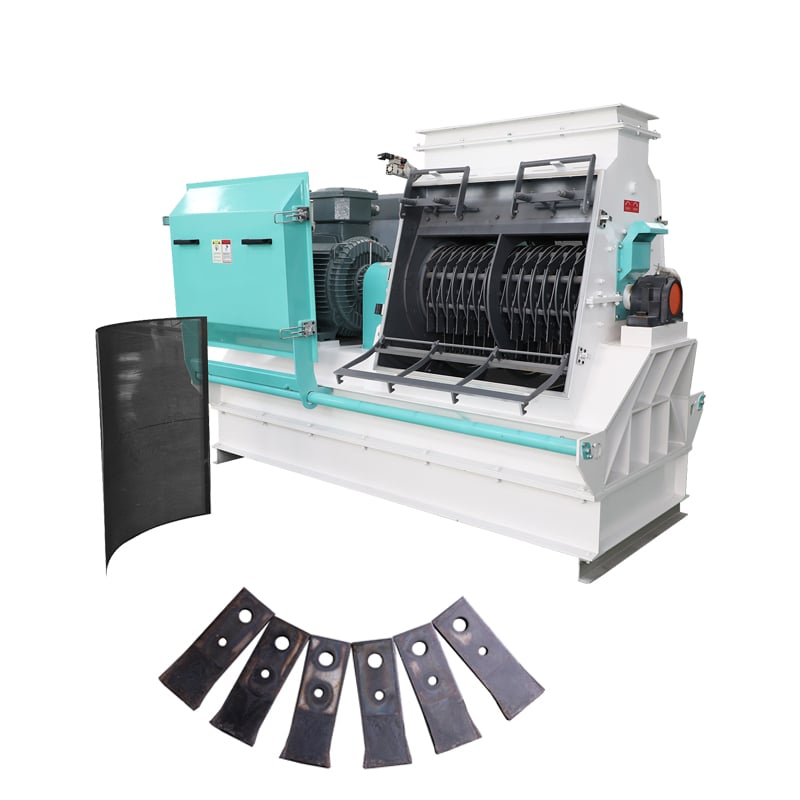
A hammer mill may continue running even after its internal wearing parts have deteriorated. However, worn hammer edges, enlarged screen openings, or blocked perforations can gradually affect particle size, throughput, and overall grinding performance.
For feed manufacturers, the challenge is knowing whether reduced output comes from a worn hammer mill blade, an unsuitable hammer mill screen, inconsistent feeding, or another operating issue. Replacing parts too early increases maintenance costs, while replacing them too late may lead to unstable grinding results and unplanned downtime.
This guide explains the main signs that hammer mill blades and screens need attention, how to assess their condition, and how to select suitable hammer mill spare parts for your feed processing line.
2. Quick Answer: When Should You Replace Hammer Mill Blades and Screens?
Replace or inspect a hammer mill blade or hammer mill screen when there is measurable wear, visible damage, or a persistent decline in grinding performance that cannot be explained by changes in the feed material or operating conditions.
Replace or service hammer mill blades when:
The leading edges become noticeably rounded.
Both usable working edges are worn.
The hammers have shortened enough to change the hammer-screen gap.
Pin holes show significant elongation, cracks, or other damage.
Replace or service a hammer mill screen when:
Cracks, tears, dents, or damaged mounting areas are visible.
Screen holes have enlarged beyond the required specification.
The screen is repeatedly blocked by damp or oily material.
Finished particle size becomes too coarse or inconsistent.
These signs should be evaluated alongside throughput, motor load, feed consistency, and the manufacturer's maintenance instructions. There is no single replacement interval suitable for every hammer mill.
3. What Does Yuda Offer for Hammer Mill Blades and Screens?
Yuda's official spare parts category lists both Screen Plate and Hammer Mill Blade. Its hammer mill blade page describes blades designed to reduce material into smaller, more uniform particles and states that customized designs are available for different grinding requirements.
Shanghai Yuanyuda International Trade Co., Ltd.
The website's published product information identifies the following details.
|
Item |
Published information |
|
Hammer mill blade compatibility |
Blades are listed for SFSP56, SFSP65, and SFSP66 series hammer mills in the supplied product information |
|
Blade options |
Tungsten carbide spray welding, hard-alloy options, and customized designs are described in the reference article |
|
Customization |
Blade designs can be customized for different grinding applications |
|
Screen plate |
Listed in Yuda's official spare parts category |
|
Screen specifications |
Confirm the compatible model, hole size, plate thickness, material, and other requirements with the supplier |
The official spare parts page does not provide one universal blade dimension, screen-hole specification, or service-life figure for every model. Buyers should confirm these details for their particular machine before ordering.
Shanghai Yuanyuda International Trade Co., Ltd.
For product details, visit the Yuda Hammer Mill Blade page and the Yuda Spare Parts category.
4. Five Signs That a Hammer Mill Blade Needs Replacement
4.1 Rounded or Worn Working Edges
The working edges of a hammer mill blade gradually wear during repeated impacts with feed ingredients. As the edges become rounded, the hammer may become less effective at breaking material into the required particle size.
If the grinding output becomes coarser despite unchanged raw materials and operating settings, inspect the hammer edges before assuming that the screen is the only problem.
4.2 Reduced Output at Similar Operating Conditions
A decline in throughput may indicate worn hammers, but it is not conclusive evidence by itself. Feed rate, moisture content, screen condition, and airflow can also influence performance.
Compare production records under similar conditions. If output continues to decline and inspection confirms significant hammer wear, replacement may be necessary.
4.3 An Increased Hammer-Screen Gap
As hammers become shorter, the gap between the hammer tips and the screen can increase. This may reduce grinding effectiveness and contribute to a coarser final product.
Measure the gap according to the equipment manufacturer's procedure. Do not select a finer screen as the first response without checking whether worn hammers are contributing to the problem.
4.4 Damage Around Pin Holes or Hammer Bodies
Elongated pin holes, cracks, deformation, or other structural damage can affect safe operation. Damaged parts should be assessed promptly and replaced when required by the manufacturer's inspection criteria.
4.5 Uneven Wear Across the Rotor
If hammers at one end of the rotor wear faster than those at the other end, the cause may be uneven feeding or an issue with material distribution inside the grinding chamber.
Inspect the feeder, inlet, and material distribution before automatically choosing a different hammer material.
5. Four Signs That a Hammer Mill Screen Needs Replacement
5.1 Enlarged Screen Holes
The hammer mill screen determines which particles can pass through the grinding chamber. As the screen wears, its holes may enlarge, allowing particles outside the original size range to pass through.
Inspect the screen at several locations, especially areas exposed to heavy material impact. Compare the measurements with the original or approved specification.
5.2 Cracks, Tears, or Deformed Areas
Cracks along rows of holes, torn sections, dents, and damaged mounting areas can indicate that the screen is no longer suitable for continued use.
Do not wait for the finished product to become visibly inconsistent before addressing structural damage.
5.3 Blocked Screen Openings
Damp, oily, or sticky ingredients may accumulate in screen openings. Blocked holes reduce the effective open area, which can restrict material discharge and affect feed grinding efficiency.
Check whether the blockage is related to raw material condition, moisture, cleaning procedures, or screen selection before replacing the plate.
5.4 Inconsistent Finished Particle Size
If the final product becomes coarser or more variable, check both the screen and the hammer-screen gap. Screen wear is one possible cause, but worn hammers and changes in raw material can produce similar symptoms.
6. How Hammer Mill Screen Size Affects Feed Grinding Efficiency
Choosing the right hammer mill screen size is essential for balancing particle size, throughput, and operating costs.
A smaller screen opening generally requires particles to become finer before they can pass through. Depending on the material and mill configuration, this may increase the time particles spend in the grinding chamber and affect throughput.
A larger opening can allow material to pass more readily, but it may not achieve the target particle size required by the next processing stage.
|
Screen condition |
Possible effect |
What to check |
|
Opening too small for the application |
Lower throughput or increased grinding load |
Target particle size, material properties, and screen specification |
|
Opening too large |
Finished product may be too coarse |
Particle-size requirements and downstream process needs |
|
Holes enlarged by wear |
Gradual change in particle-size distribution |
Measured hole dimensions versus approved specification |
|
Openings blocked by material |
Reduced effective open area and restricted discharge |
Material moisture, blockage, and cleaning practices |
|
Cracked or damaged plate |
Unreliable operation and potential safety concerns |
Plate integrity and mounting condition |
Screen-hole diameter is not the only factor that influences performance. Hole spacing, open area, plate thickness, material characteristics, hammer condition, and airflow can also affect results. The appropriate combination should be confirmed for the specific hammer mill and feed formulation.
7. How to Diagnose Reduced Feed Grinding Efficiency
When feed grinding efficiency declines, replacing hammer mill spare parts immediately may not solve the underlying problem. A structured inspection helps identify the actual cause and avoid unnecessary maintenance costs.
Step 1: Compare operating records
Check throughput, motor load, feed rate, raw material moisture, and finished particle size against a stable operating period.
Step 2: Inspect the hammer mill blade
Look for rounded edges, unequal wear, cracks, and changes in hammer length or pin-hole condition.
Step 3: Inspect the hammer mill screen
Check for blocked or enlarged holes, cracks, deformation, and an unsuitable screen specification.
Step 4: Check the operating system
Review feeding uniformity, material flow, airflow, and other manufacturer-specified operating conditions.
Step 5: Record the result
Record the inspection date, operating hours, material processed, measured wear, and any replacement work. Use these records to improve future maintenance planning.
Always stop the machine, isolate its power supply, and follow the manufacturer's lockout and maintenance procedures before inspecting internal components.
8. Common Problems and Troubleshooting
|
Problem |
Possible cause |
Recommended action |
|
Finished material becomes coarser |
Worn hammers, enlarged screen holes, or a wider hammer-screen gap |
Inspect hammer edges, measure screen holes, and check the gap |
|
Throughput drops after a screen change |
The new screen may have less effective open area or an unsuitable specification |
Compare hole diameter, spacing, open area, and plate thickness |
|
Screen openings repeatedly become blocked |
Damp, oily, or sticky raw material |
Review material condition, cleaning, and screen suitability |
|
New vibration after replacing hammers |
Uneven hammer weights, incorrect installation, or another mechanical issue |
Stop the machine and check the set balance and installation |
|
Wear is concentrated on one side |
Uneven feeding or material distribution |
Inspect the feeder, inlet, and distribution across the grinding chamber |
These are possible causes, not definitive diagnoses. Confirm the actual condition through inspection and follow the machine manufacturer's troubleshooting guidance.
9. How to Select the Right Hammer Mill Spare Parts
When purchasing a hammer mill blade or hammer mill screen, provide enough information for the supplier to confirm compatibility and manufacturing requirements.
Information to Prepare Before Requesting a Quote
Machine model: For example, the relevant SFSP series and exact model designation.
Part type: Hammer mill blade, screen plate, or another component.
Original specifications: Drawings, dimensions, photos, part numbers, or a sample where available.
Grinding material: Such as corn, wheat, or other feed ingredients.
Target particle size: The required finished particle size and any applicable tolerance.
Operating conditions: Typical throughput, working hours, and observed wear pattern.
Material and treatment requirements: Ask the supplier to confirm the base material, working-edge treatment, and other specifications appropriate for the application.
Yuda's published hammer mill blade information describes customized blade designs and different grinding applications. Its spare parts category also lists screen plates and hammer mill blades. For model compatibility and current technical details, confirm the requirements directly with the supplier before placing an order.
Shanghai Yuanyuda International Trade Co., Ltd.
10. Conclusion
Knowing when to replace a hammer mill blade or hammer mill screen is essential for maintaining stable particle size, reliable throughput, and effective maintenance planning.
Rounded hammer edges, enlarged screen holes, blocked openings, structural damage, and persistent performance changes are all reasons to inspect the grinding system. However, no single symptom should automatically trigger a replacement without checking the actual operating conditions.
A practical maintenance strategy combines regular inspections, particle-size testing, throughput records, and clear spare-parts specifications. By monitoring wear and confirming compatibility before ordering hammer mill spare parts, feed manufacturers can make more informed maintenance decisions and reduce avoidable downtime.
For model-specific information about hammer mill blades and screen plates, visit the Yuda Spare Parts page or the Hammer Mill Blade product page.
11. Frequently Asked Questions (FAQ)
Q1: How often should hammer mill blades be replaced?
There is no universal replacement interval. Hammer life depends on the processed material, operating hours, hammer design, and actual wear conditions. Inspect the working edges and follow the equipment manufacturer's maintenance recommendations.
Q2: What are the main signs of a worn hammer mill screen?
Common signs include enlarged holes, cracks, dents, blocked openings, and changes in finished particle size. Compare measured hole dimensions with the original or approved specifications.
Q3: Does a smaller hammer mill screen size always produce better grinding results?
No. A smaller screen opening may produce finer material, but it can also reduce throughput depending on the material and machine configuration. Select the hammer mill screen size according to the target particle size and operating requirements.
Q4: Can I replace only the worn hammer mill blades?
That depends on the manufacturer's instructions and the condition of the full set. Mixing new and heavily worn hammers can create differences in weight and length. For applicable designs, replace the set or matched pairs as specified by the manufacturer, and ensure correct balance and installation.
Q5: Why does feed grinding efficiency decline after installing a new screen?
Possible reasons include a different effective open area, an unsuitable screen specification, blocked openings, worn hammers, or changes in feed material. Compare the new screen with the previous specification and inspect the hammer-screen gap before making another change.
Q6: What information is needed to order hammer mill spare parts?
Provide the exact machine model, part type, available drawings or dimensions, processed material, target particle size, and operating conditions. Ask the supplier to confirm compatibility and the applicable technical specifications before ordering.
Q7: Does Yuda offer customized hammer mill blades?
Yuda's official hammer mill blade page states that blade designs can be customized for different grinding requirements. Contact the supplier with your machine model and technical requirements to confirm the available options.
Shanghai Yuanyuda International Trade Co., Ltd.
Written by: Yuda Machinery Engineering Team
Based on experience in feed machinery manufacturing, equipment design, spare-parts selection, and overseas project support.
Table of Contents
- 1. Introduction
- 2. Quick Answer: When Should You Replace Hammer Mill Blades and Screens?
- 3. What Does Yuda Offer for Hammer Mill Blades and Screens?
- 4. Five Signs That a Hammer Mill Blade Needs Replacement
- 5. Four Signs That a Hammer Mill Screen Needs Replacement
- 6. How Hammer Mill Screen Size Affects Feed Grinding Efficiency
- 7. How to Diagnose Reduced Feed Grinding Efficiency
- 8. Common Problems and Troubleshooting
- 9. How to Select the Right Hammer Mill Spare Parts
-
10. Conclusion
- Q1: How often should hammer mill blades be replaced?
- Q2: What are the main signs of a worn hammer mill screen?
- Q3: Does a smaller hammer mill screen size always produce better grinding results?
- Q4: Can I replace only the worn hammer mill blades?
- Q5: Why does feed grinding efficiency decline after installing a new screen?
- Q6: What information is needed to order hammer mill spare parts?
- Q7: Does Yuda offer customized hammer mill blades?
