
 EN
EN


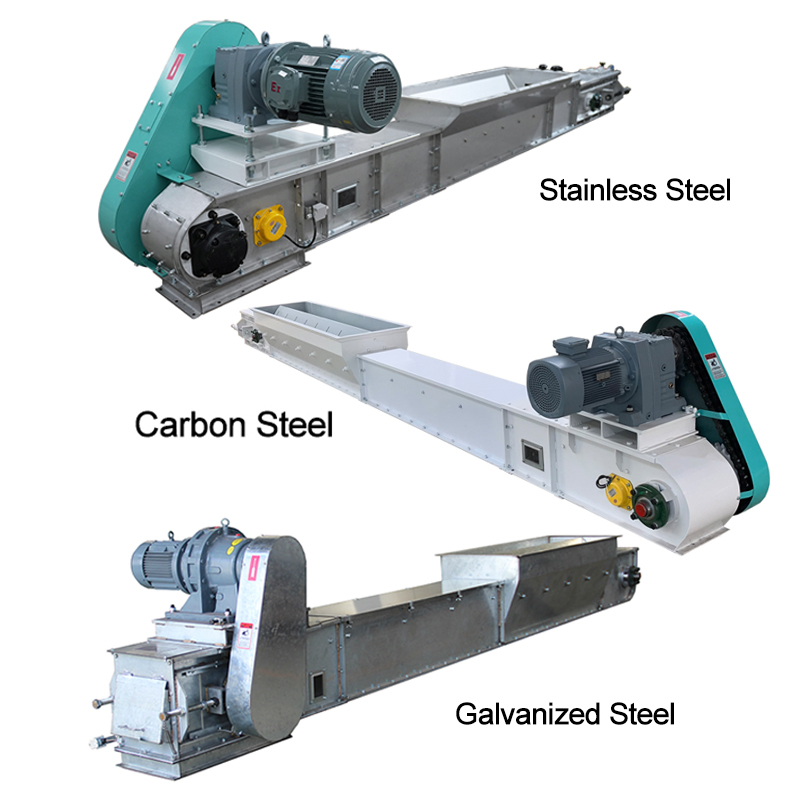
Choosing the appropriate conveying solution for feed mills, fertilizer plants or bulk-handling facilities is a crucial operation that can impact throughput, maintenance and the quality of products produced daily. Drag chain conveyors and belt conveyors are two of the most popular choices for horizontal or inclined conveyors. Each has its own set of advantages and disadvantages. We have engineered, supplied and installed both types on hundreds of turnkey projects at Shanghai Yuanyuda International Trade Co., Ltd. This guide analyzes them on practical characteristics from their performance in the field and will guide you to the one best suited for your production line.
Material Characteristics and Handling Sensitivity
The first filter in this decision is what kind of bulk material it is. Belt conveyors are very effective for free-flowing, non-abrasive grains, pellets and meals. They provide gentler handling than other conveying surfaces for general material carrying, with lower risks of product damage and dust release, and are suitable for finished feed products where product appearance and integrity are of concern. If the materials are high-friction, such as organic-fertilizer granules, mineral additives or biomass with sharp edges, however, then a drag chain conveyor is the better option.It features an enclosed trough and is built to handle abrasive and heavy loads without suffering surface damage. Drag chain conveyors are also less prone to material build-up than belt surfaces, which may become slick and cause material slippage when handling sticky or high-moisture ingredients. Shanghai Yuanyuda International Trade Co., Ltd. supplies both TGSS/TGSU-series chain conveyors and tailor-made belts, which can be customized for each product portfolio.
Layout Flexibility and Space Constraints
These conveying pathways may be curved, have multiple discharge points or be inclined; factory floors are seldom ideal. Belt conveyors work best on relatively horizontal runs that have gentle slopes. They have limited ability to make tight bends and cannot perform vertical lifts without additional configurations and costly equipment.Drag chain conveyors, on the other hand, are highly flexible. They may traverse horizontal, inclined and even vertical sections within a single contained system and can be built with several inlets and outlets on the path. Where material needs to be distributed from a single feed point to multiple bins or processing stations, drag-chain conveyors represent a good option. For more complex plant layouts or plant retrofits, drag-chain conveyors from our TGSU/TGSS series can be the most practical option without the need for major structural modifications.
Maintenance, Wear, and Operating Costs
The differences become starker when it comes to the long-term cost of ownership.The straight run belt conveyors are generally cheaper and easier to maintain. Their essential wear parts such as belts, idlers and pulleys are uncomplicated to examine and change. Belts, however, can be cut, torn, and stretched, particularly when they are exposed to heavy loads or sharp objects. They must also be adjusted to track in order to avoid misalignment. Chain conveyors that are used for dragging are more rugged, but wear is most likely to occur on the chain links, flights, and trough liners. These components are engineered for durability and individual parts can be replaced without disassembling the whole system. Drag-chain conveyors are often used in abrasive-material applications, where replacement frequency is several times lower than for belt conveyors. Shanghai Yuanyuda International Trade Co., Ltd. provides you with both systems with wear resistant materials and spare parts, such as chains, sprockets and liners, for reliable operation.
Dust Control and Environmental Compliance
In modern processing plants, dust control is no longer a housekeeping problem, but an issue of regulatory compliance and safety.Where material discharges from belts at transfer points — especially on open belt conveyors — high levels of airborne dust can be generated along the carrying surface. This makes them more expensive and complicated to enclose. Drag-chain conveyors are dust-tight and produce minimal spillage thanks to their sealed construction. Therefore, they are the best choice for facilities handling fine powders, meals or dried fertilizer, where fugitive dust would otherwise create a risk of explosion or a health hazard.Moreover, the all-enclosed design makes the installation of dust collection systems easier. The drag chain conveyor provides the plant with a cleaner, safer working environment, and lower product loss, when plants are seeking strict environmental requirements. Specialists in the Shanghai Yuanyuda International Trade Co., Ltd. team can recommend the optimal sealing and filtering solutions according to the local regulations.
To sum up, select a belt conveyor for simple, straight-run conveying lines handling free-flowing, non-abrasive materials, when your priorities are low initial capital cost and simple maintenance. Opt for a drag-chain conveyor for long-lasting performance and low environmental impact, especially for challenging layouts, abrasive materials or dusty materials, where long-term durability is required.The correct selection depends on your production line, layout and material characteristics; neither type is inherently superior to the other.Shanghai Yuanyuda International Trade Co., Ltd. provides technical services to evaluate your process requirements and supply conveying systems optimized for efficiency and reliability to match your specific business needs.
