
 EN
EN


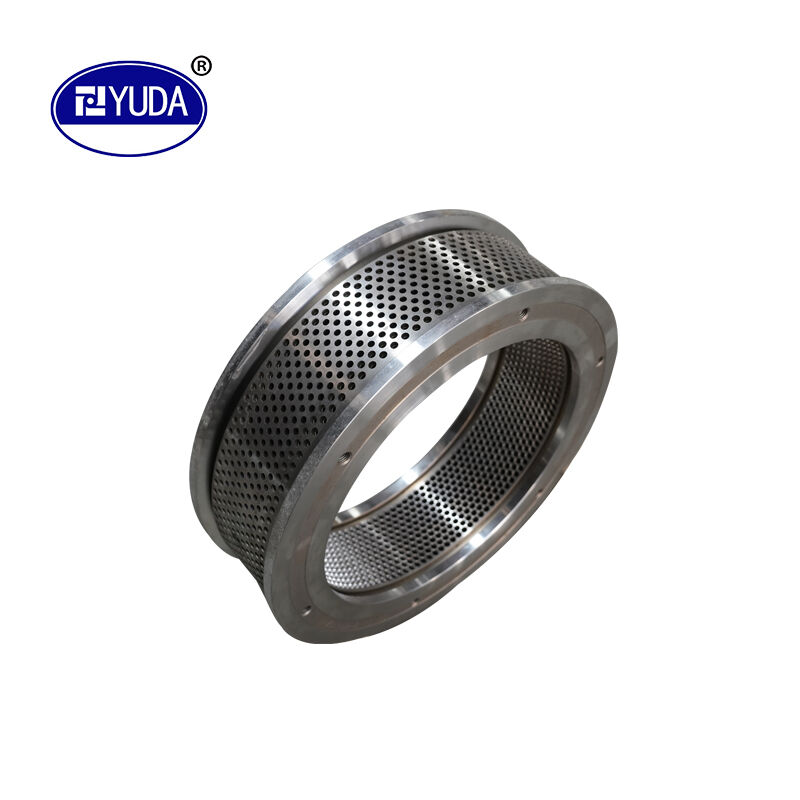
Proper selection of ring die compression ratio is the most critical step of feed pelleting. A poor choice of ring die compression ratio will result in weak pellets, low output, excessive die wear, and machinery breakdowns. Shanghai Yuanyuda International Trade Co., Ltd. explains the concept of ring die compression ratio, its purpose, and how to choose the correct one for your feed formulation and operation.
What Is Ring Die Compression Ratio?
Ring die compression ratio is the ratio between the diameter of die hole to the effective length of the die hole.For a ring die with an effective length of 60 mm and a die hole of 6 mm, its compression ratio is 10:1. The ring die compression ratio determines the amount of pressure experienced by feed material while passing through the die. The higher the compression ratio, the longer the die hole, resulting in higher friction and pressure, which produce stronger and denser pellets. The lower the compression ratio, the shorter the die hole, causing less friction and pressure, leading to a faster production rate and softer pellets that may generate more fines. The ring die compression ratio needs to be suitable for the feed formulation. Feed formulation composition includes proteins, carbohydrates, minerals and fats. Each ingredient has natural binding capacity, varying fat content, fiber content and water absorption properties.
How Feed Formulas Affect Compression Ratio Selection
Feed formulations determine the suitability of ring die compression ratio. High-protein formula feeds, which contain large amounts of grains and protein meals, have strong binding capacity and can form stable pellet structures at a lower compression ratio. For these formulations, a ring die compression ratio between 8 and 10 is sufficient. In high-urea formulas for ruminant feeds, urea has a slippery texture and poor binding properties, making it difficult to form stable pellets. To produce durable pellets from these formulas, a higher compression ratio of 11 to 13 should be used. High fiber formula use ingredients such as alfalfa, rice hulls, and sunflower meal. Fiber is very resilient; its elasticity can cause pellets to shrink after exiting the die. Therefore, a compression ratio between 12 and 14 is useful for forming hard pellets. In high fat formula, fat acts as a lubricant, reducing friction between the feed and the die hole. High level of fats will cause feed to slide through die hole rapidly. Excessive fat content can result in very low pellet strength. To overcome these problems, a compression ratio of 6 to 8 can be chosen, and pellet binders should be added to high-fat formulations with fat content above 6%.
Common Compression Ratio Recommendations for Different Feed Types
Poultry feed compression ratio between 8 and 11. Broiler feed can use the lower end, while layer feed should use the higher end. Broilers require a high production rate, while layers require hard pellets and fewer fines.Swine feed ratio between 7 and 10. Starter feed at the higher end, grower-finisher feeds at the lower end. Starter feeds have weaker binding ability so they need hard pellets while grower-finisher feeds have good binding ability so they only need fast throughput. Aquatic feeds require much higher compression ratios due to high water resistance requirements. Floating feeds between 13 and 18. Sinking feeds between 10 and 14. Shrimp feeds between 14 and 20, because shrimp pellets must remain stable in water for long periods. Cattle feed between 8 and 12. High forage or high urea feeds should use the higher end of this range. Pet feed depends on recipes. Dog and cat food typically use a compression ratio between 10 and 14. All the above recommendations are general starting points.
Tips to Extend Ring Die Life and Improve Pellet Quality
Proper break in the new ring die. A new ring die can be run with an abrasive mixture of grains, oil and sand for 15 to 30 minutes at a low machine speed. The abrasive mixture polishes the internal surfaces of the ring die without damage. Adjust the gap between the feed roller and the ring die. A suitable gap is between 0.2 mm to 0.5 mm between the roller shell surface and the ring die working surface. An incorrect gap will reduce feed efficiency and damage both the ring die and feed rollers.Condition the feed correctly before it enters the ring die. The proper conditioning temperature is between 70°C and 90°C, and the moisture content after conditioning should be about 15% to 18% for most feed formulas. It can reduce friction between feed and the die hole. Rotate the ring die. It is recommended to reposition the die every 500 to 1000 tons of feed so that the wearing of the ring die could be balanced and double its working life. Check die faces for clogged holes. Check the die face for blockages daily. Use a punch or drill if any hole is blocked. Never burn out blocked materials with a flame, as the heat will damage the die's metallurgical properties and cause it to crack. Replace the ring die when the wall thickness reaches the manufacturer’s specified minimum. Continued use of a worn die will also damage roller shells, spindles and clamp assemblies. Properly store the spare ring dies.
Summary
Selecting a suitable ring die compression ratio is a complicated decision-making process based on feed formulation, required pellet durability and the expected production output. After determining a proper compression ratio, it is equally important to perform correct adjustments, including proper break-in, gap clearance, feed conditioning, ring die rotation, proper cleaning and timely replacing of the ring die to maximize the life span of the die and the quality of pellets. Shanghai Yuanyuda International Trade Co., Ltd. is a supplier of high-quality ring dies, roller shells and all sorts of spare parts suitable for all makes of domestic and imported feed machines. With the assistance of the technical team, the optimum compression ratio is suggested for each customer.