
 EN
EN


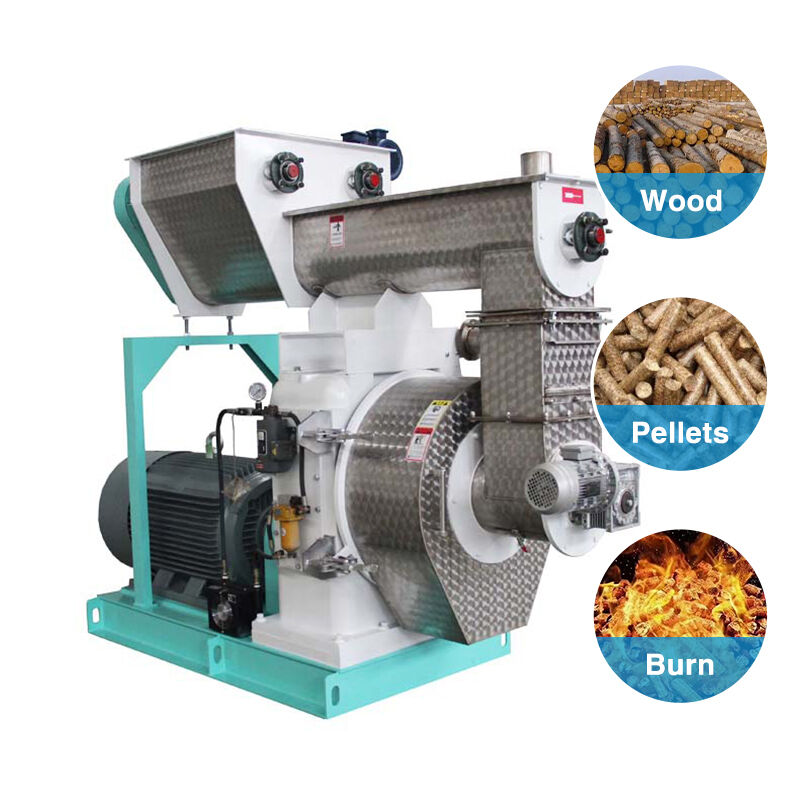
The most important element in the final production of biomass pellets is the moisture content. It has a direct effect on the pellet density, strength, energy usage and the end product quality. When the raw material is excessively damp, the pellets can become stuck, clog machinery and be prone to mould.When they get too dry, then they do not bind correctly and this leads to excessive fines and poor compaction. Shanghai Yuanyuda International Trade Co. Ltd. offers a complete ecosystem of equipment that can realize this fine balance starting with the preparation of raw materials up to the cooling of the final goods.
High-Accuracy Drying using Fine-Tuning Drying Equipment
the first step in moisture management involves raw biomass in the form of wood chips, sawdust, or agricultural residues, which are typically received with highly uneven and excessive moisture. Drying is required to be regular and effective. Our dryer machine is designed so that the heat is distributed and the airflow can be regulated such that the moisture content is adjusted to the optimal range of 10-15%.This first step ensures that there is stable processing downstream. Dried material passes through conveying equipment without difficulty and eliminates the plugging of grinding equipment, resulting in uniform particle size.
Conditioning: The Accurate Steam Application
Drying and grinding is followed by the conditioning stage which refines moisture levels. A conditioner is used to inject the dry biomass with controlled steam. This step partially liquefies the natural lignin - a biological binder and introduces an exact amount of surface moisture (usually 13 percent). This moisture plays a crucial role in lubrication and bonding during extrusion" / "The optimal moisture content is achieved at this stage.Proper steam conditioning has a direct influence on wear of core pelletizing parts including ring die, roller shells in the pellet mill. the optimal moisture content is achieved at this stage so that there is even flow of the material inside the die holes, better compression and abrasive wear is minimized on these very important parts.
The Pellet Mill: The End of Moisture Control
The pellet mill is the epicenter of the process, where moisture, heat, and pressure converge. This creates a lot of heat (up to 90 -100 o C) due to the friction created as the material is forced through the ring die by the roller shells, thereby flash-drying the pellets both internally and externally. The level of initial moisture determined in conditioning is critical. A high moisture content in the feedstock may cause excessive friction, leading to overheating and poor pellet quality, subsequently waste of energy. Excessively damp material does not get to the required temperature and pressure which leads to soft and poorly formed pellets. The extruder equipment such as the spindle and hollow shaft is designed to withstand these high temperatures and high pressure conditions and continue to operate steadily.
Cooling and Stabilization: Quality Locking
Hot, wet, and soft pellets are freshly extruded. Hardening and stabilization through effective cooling are required. We cool the pellets with our cooling equipment (counter-flow coolers) which forces ambient air through the bed of pellets, not only cooling the pellets but also eliminating 1–2% more moisture. This last drying step is necessary to make storage stable pellets having desired end moisture content (usually less than 10%). After the cooling process, the pellets are taken through sifting apparatus to extract the fines prior to packaging. Durable screen plates ensure efficient separation and the integrity of connections in the process is ensured by reliable clamping systems.
Here in Shanghai Yuanyuda International Trade Co. Ltd. we realize that moisture control is not a solution involving a single step but a system-level process. It relies on the synchronized action of the drying, conditioning, pelletizing and cooling devices. The one step depends on the other, and the quality of the instruments, the ring die, the hammer mill blades (to be uniformly pre-ground), the conveyor system, is the corner stone of the whole operation. By understanding this moisture management cycle and choosing appropriate, properly supported equipment, producers can use this system to attain high-quality pellets, increase production efficiency, and extend the service life of their equipment.