
 EN
EN


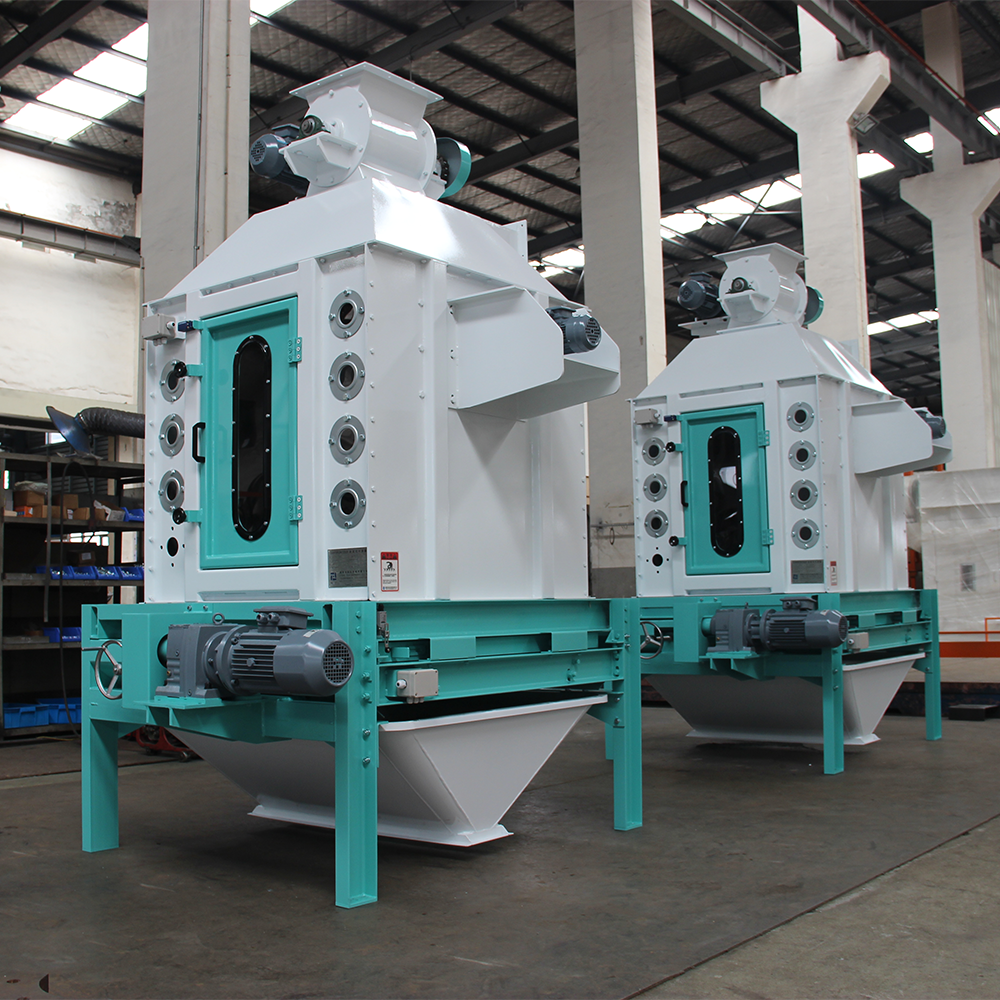
To the operators at feed mills, pellet breakage is not just a quality issue but also a direct loss of profit.Splintered pellets cause high fines, raw materials wastage, loss in nutritional uniformity and the quantity of dust in the plant. Although the process of pellet making starts at the pellet mill using quality ring dies and roller shells, the cooling process is also crucial for maintaining pellet durability. Counterflow coolers are particularly made to ensure the minimization of pellet damage. There are four key aspects to how they achieve this, as well as how to make the most of them by integrating them with your overall production equipment.
Light Cooling to prevent Thermal Shock
The highest chances of pellet cracking are when hot and damp pellets in the extruder or pellet mill are exposed to extreme cooling conditions. This is avoided by the use of counterflow coolers. Pellets that have already been partially cooled in the previous stage are exposed to cool air, and the hottest ones are subjected to warmer and moist exhaust air. This slow increase in temperature avoids internal stress fractures and even allows the pellets to shrink and harden uniformly.This is a much milder process compared to vertical or horizontal coolers which may subject the pellets to immediate cold air shock and destroy the integrity of the structure that is generated in the granulation.
Regular Airflow in order to have Consistent Pellet Integrity
The non-uniform cooling process leaves pellets with soft and weak areas which are likely to crumble. Counterflow coolers of high performance have optimized plenum chambers and air distribution systems, which provide even cooling exposure to all the pellets. This consistency is particularly significant in the case of pellets of a different size and composition. They have a uniform pellet hardness to allow them to survive the mechanical actions of downstream conveying and crumpler machines, which greatly decreases fines production in the transporting and sorting processes.
Reduction of Mechanical Movement and Abrasion
Counterflow coolers are internally designed for smooth, controlled discharge. The pellets are not dropped, scraped or struck against the walls of the cooling chamber but swept smoothly through the cooling chamber, usually by a sweeping discharge mechanism. This reduces tumbling, rubbing and impact- which are usual causes of abrasion and breakage. Lessening the mechanical abuse in the cooling itself results in pellets entering into sifting equipment with fewer initial fines, which means the screens can sort the material without being clogged by dust and other fine particles.
Maximizing Removal of Moisture to stabilize Pellet Structure
Effective cooling is inseparable from effective drying.Counterflow coolers excel at removing excess moisture. Pellets become weak and more apt to crumbling when the distribution of moisture is not even. The cooler ensures the final moisture content is safe and uniform enough to have the starch matrix formed in the granulating process solidify fully. The end product is a hard, durable pellet that resists breakage during handling, storage, and transportation. This process acts in harmony with upstream dryer equipment to produce a stable and shelf ready product.
Finally, reducing pellet breakage is a targeted objective that can be achieved through the use of appropriate technology and seamless integration with the entire production line. A properly operating counterflow cooler is the last quality control, and it is a safeguard for your investment in high-performance granulation and extrusion equipment. It directly contributes to higher product yield, better feed quality as well as better operations through the provision of consistent, uniform cooling.