
 EN
EN


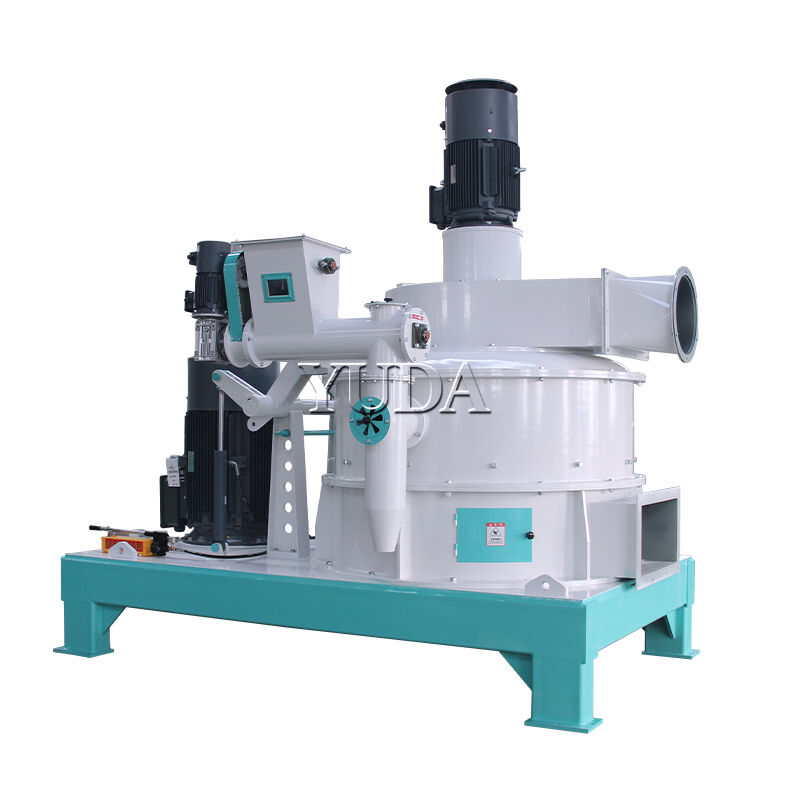
High quality and consistency of a product fineness is highly valued in industries, which include the feed processing of the feed, fresh fertilizers, and the production of new energy materials. These are performed by the use of a central machine known as vertical pulverizer (also referred to as air-swept mill or vertical shaft impactor), the product of which directly correlates with efficacy, reactivity and market value of the product. Our 30 years experience in Shanghai Yuanyuda International Trade Co., Ltd is applied to offer our customers a customized turnkey solution that will allow them to optimize their grinding processes around the world. This guide outlines some viable steps to improve and control product fineness in your vertical pulverizer.
Master the Fundamentals: The Grinding Zone Trinity
The grinding zone has three interacting components of your main controls of fineness:
Grinding Element (Hammers/Beaters) Wear & Design:
Problem: The worn out hammers reduce the force of impact and shear efficiency leading to rough and uneven products. Solution: Existing solution Since hammers need replacing or rebuilding before becoming worn-out, have severe preventive maintenance program. Consider the shape profile- block, rod, fin, has an effect on particle trajectory and attrition. You may rely on the services of such professionals as Yuanyuda to select the abrasiveness of your material that can withstand the most wear.
Classifier (Separator) Speed & Adjustment:
Issue: This can be the most critical control. The height of the cut is determined by the speed of a rotating classifier (or the angle of the vanes in a fixed design). A slow speed will allow the coarse material to go through it; a very high speed will result in the fine material being re-ground and the capacity will be lowered and excessive re-grounding will be experienced.
Remedy: Tune the classifier accurately with respect to on-line fineness measurements. This is the aim of the modern pulverizers having a variation frequency drive (VFD). Ensure that the blades of the classifier are not worn-out or coated with any substance that will obstruct the passage of the air and accuracy of the separation.
Airflow Volume and Velocity:
Problem: Particle transfer Material is transferred by airflow, residence time in the grinding chamber, and the transfer of particles to the classifier. This will reduce the capacity and could lead to them overheating; excess will lead to the coarse particles shorting out of the mill.
Fix: Set the fan damper settings and the classifier speed to equal. Ensure the system is airtight- be sure that there are no duct leaks, seals, and filter bag since they disrupt the internal air balance that is required in classification.
Optimize Feed Parameters
What feed not well Thou can not well grind.
Consistency in Feed Rate: The first significant enemy of fineness consistency is a changing feed rate. Feeding excessive causes congestion of the grinding zone, reduced energy/particle and plugging of the classifier. The consequence of underfeeding is the resultant starved mill which leads to more opportunities of over-grinding and wear on account of contact of metal to metal.
Fix: Precision feeder (screw, vibratory or belt weigh feeder) to hold a constant and controlled feed rate, which is equivalent to the desired mill capacity.
Features of feed material:
Size:. Pre-crush oversize material. The vertical pulverizer is created to grind but not to make primary size reduction.
Moisture Content: When the material is too moist, it becomes sticky and becomes clogged in the grinding chamber and even separates to the other parts of the classifier hence becoming less effective in the grinding process. Pre-drying should be used where required.
Uniformity: Uniformity of mixture of raw materials exposes the grinding to predictable behaviour.
Utilize Advanced Control and Monitoring
Proactive control reactive to change.
Install Process Instrumentation: Have online particle size measurement instruments (e.g., laser diffraction) on the product stream that will provide a real time feed back. Feed this back to a PLC that is capable of adjusting the speed of the classifier to maintain the required fineness constant to compensate wear and feed variations.
Measures Key parameters: Monitor mill motor amperage (grinding load), fan differential bearings temperatures and pressures. When such measures are set benchmarking, they come in handy in the identification of an aberration prior to its influence on the quality of the products.
Strategic Maintenance for Consistent Performance
Performance degrades with wear; prevent this by maintaining an intervention time schedule.
Liner and Screen Inspection: Aging liners of the chamber, and broken or eroded screens (when it comes to screens) change the internal dynamics and the paths of particles. Check and change them in case of a scheduled shut down.
Air System integrity: Air leakages are not good as mentioned. Check integrity of seals of mill housing, all duct connections and dust collector periodically.
Rotor Balance: A faulty rotor will create vibration, premature wear on all the components and also lead to uneven grinding. Re-balance the rotor when it has experienced much replacement or refurbishing of the hammer.
Partner with Yuanyuda for Precision Grinding Solutions
Finning-out process is a systemic procedure and involves an incorporation of an appropriate machine selection, proper operation, and intelligent repairing. Our ability to provide turnkey solutions, which are tailored, is the reason why we are strong at Shanghai Yuanyuda International Trade Co., Ltd. We do not just sell a machine but we create a system.
We select or build a vertical pulverizer with the most optimum grinding element geometry, type of classifier, and configuration of air system to fit the specific material, either; brittle feed additives, hygroscopic fertilizer intermediates, or hard new energy minerals, since the early design stage. Our ISO, CE and SGS certified products are engineered for precision and durability, and our 24/7 technical support helps you maximize their performance.
Alterations in not being able to fit into fineness demands or uncontrolled product quality? Connect with our engineers all over the globe. Our experience of over 50 years in service to more than 50 nations can provide all the audit or can recommend certain improvements, or can deliver an entire high-performance grinding rig that will fit your needs exactly. We shall help you make far finer margins, by finer products.