
 EN


Introduction
Turning fermented livestock manure, compost and agricultural organic waste into commercial fertilizer pellets requires more than a conventional pellet mill. These materials often contain residual moisture, organic acids and fibrous components. Their sticky texture and variable flowability can make feeding, compression and continuous pellet production more challenging than processing dry grain materials.
For fertilizer manufacturers, the main equipment concerns are usually material adhesion, unstable feeding, die-hole blockage, excessive compression load and corrosion of material-contacting components. If these issues are not addressed during equipment selection, they may lead to frequent cleaning, unplanned downtime, uneven pellet quality and higher maintenance costs.
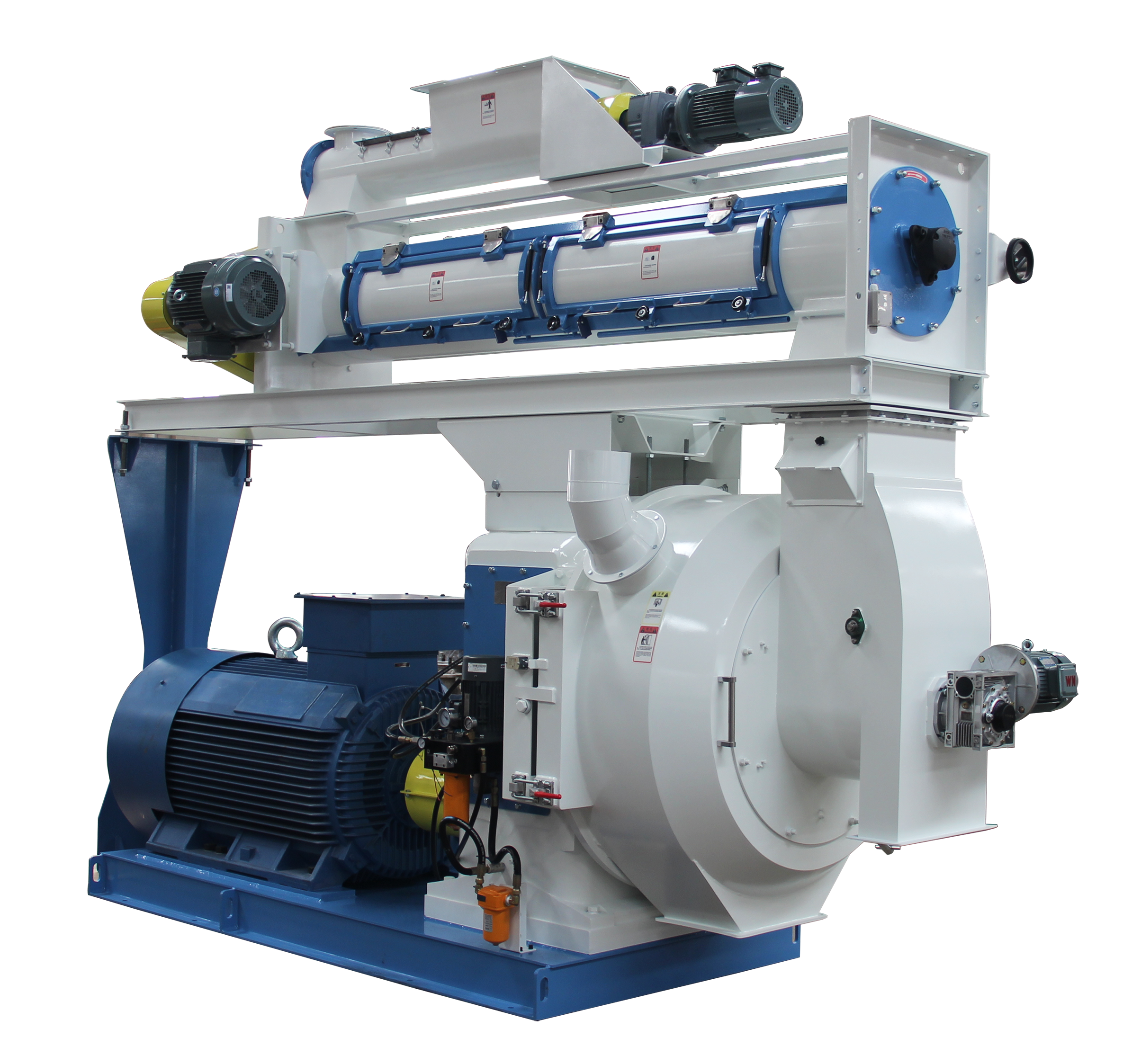
The YUDA FZLH Series Organic Fertilizer Pellet Mill is designed to process materials such as manure and sludge into organic fertilizer pellets. Its engineering features include high-precision gear transmission, a dedicated ring die and roller assembly, roller clearance adjustment, overload protection and an automatic anti-blocking mechanism.
This guide explains the material characteristics that affect organic fertilizer granulation, the FZLH machine's key design features, the published 0.5–6 t/h capacity range, and practical points to consider when selecting a ring die organic fertilizer pellet machine for high-viscosity compost.
1. Material Characteristics of High-Viscosity Compost
Organic fertilizer raw materials behave differently from conventional dry feed or grain ingredients. Before choosing an organic fertilizer pellet machine, manufacturers should evaluate the material's moisture condition, fiber content, acidity, particle structure and feeding behavior.
1.1 Residual Moisture and Sticky Material Behavior
Fermented manure and compost may retain moisture after fermentation. When the moisture distribution is uneven, some portions of the material may become sticky while other portions remain relatively dry.
Excessive stickiness can cause material to adhere to the feeder, chamber surfaces or other contact areas. It may also interfere with stable feeding into the compression chamber.
1.2 Organic Acids and Corrosion Risk
Fermented organic materials may contain organic acids and other corrosive substances. Together with moisture, these substances can increase the corrosion risk for ordinary metal components.
For this reason, fertilizer manufacturers should identify which machine components come into direct contact with the material and confirm the material grade, surface treatment and corrosion-protection requirements with the equipment supplier.
1.3 Fibers and Variable Particle Sizes
Straw, crop residues and other fibrous materials may be included in compost formulations. Long fibers or oversized particles can affect material flow and may contribute to bridging or uneven feeding.
Appropriate crushing, screening and mixing before granulation help make the feed more consistent. The required preparation process depends on the actual raw material composition.
1.4 High Compression Resistance
Sticky and fibrous compost may create variable resistance during extrusion. If the material is not prepared consistently, the load on the ring die and rollers may fluctuate, affecting production stability.
A suitable transmission system, properly matched die and roller configuration, and controlled feeding are important for maintaining stable granulation.
2. Core Engineering Features of the YUDA FZLH Organic Fertilizer Pellet Machine
The YUDA FZLH Series Organic Fertilizer Pellet Mill is designed for organic fertilizer granulation using materials such as manure and sludge. Its main engineering features focus on transmission torque, compression components, feeding stability, operating protection and maintenance access.
2.1 High-Precision Gear Transmission
The main drive adopts high-precision gear transmission. The large-module, high-ratio gear design is intended to reduce rotational speed while increasing output torque.
This configuration is suitable for applications where sticky or fibrous organic materials create substantial resistance during compression. Stable torque transmission helps the machine handle changing material loads during operation.
2.2 Dedicated Ring Die and Press Roller Assembly
The ring die and press rollers are specifically designed for organic fertilizer pelletizing. According to the YUDA selection manual, the assembly is designed with attention to structural strength and wear resistance.
The die-hole diameter and compression characteristics should be selected according to the material formulation, target pellet size and actual production requirements. A suitable ring die helps establish stable extrusion conditions and consistent pellet formation.
2.3 Adjustable Roller Clearance
The roller adjustment mechanism allows operators to adjust the clearance between the rollers and ring die. Correct adjustment is important for maintaining an appropriate compression condition.
If the clearance is unsuitable, the machine may experience unstable feeding, poor pellet formation or unnecessary wear. The adjustment should follow the equipment manual and be checked during routine maintenance.
2.4 Quick-Release Ring Die Clamping and Lifting Options
The ring die uses a quick-release clamping mechanism. Manual or electric lifting devices can also be configured to assist with ring die installation and removal.
These features help simplify die replacement and reduce the physical workload during maintenance.
2.5 Overload Protection System
The overload protection system includes a safety pin holder, safety pin and main shaft spline housing. If hard foreign objects enter the compression area or material flow exceeds the normal operating condition, excessive pressure may cause the safety pin to shear and trigger an automatic shutdown signal.
This mechanism helps protect the main drive and compression components against abnormal loads. Upstream removal of stones and metal fragments remains essential.
2.6 Automatic Anti-Blocking Mechanism
The automatic anti-blocking mechanism uses a pneumatic cylinder to open a bypass door and discharge material outside the machine when required.
It can be used during trial operation or when abnormal feeding conditions occur. Once the operating condition returns to normal, the bypass door can reset to restore the normal material flow.
2.7 Circulating Oil Cooling and Automatic Roller Lubrication
The machine is equipped with an oil circulation cooling and lubrication system for key bearings in the main transmission. The press rollers also have an automatic grease injection system with adjustable lubrication timing and intervals.
These systems help maintain lubrication conditions during extended operation. Actual maintenance intervals should follow the manufacturer's instructions and operating conditions.
2.8 Forced Feeder for Lightweight or Poor-Flowing Materials
A dedicated forced feeder can be installed on the machine door cover. It is intended to push lightweight materials or materials with poor flowability into the compression chamber.
This configuration can be considered when the compost formulation contains low-density or difficult-to-feed components.
3. FZLH Organic Fertilizer Pellet Mill: Technical Specifications and Capacity Range
The YUDA product selection manual presents the FZLH organic fertilizer pellet mill category and provides a technical table for the SZLH-F model series. The listed models cover a nominal capacity range from 0.5 t/h to 6 t/h.
The following figures are transcribed from the selection manual. The model designations are retained as printed in the technical table.
|
Model |
Power (kW) |
Capacity (t/h) |
Ring Die Inner Diameter (mm) |
Pellet Size (mm) |
Weight (kg) |
|
SZLH350F |
55 |
0.5–0.8 |
Φ350 |
φ2–φ10 |
1,950 |
|
SZLH400F |
75 |
1–1.5 |
Φ400 |
φ2–φ10 |
3,000 |
|
SZLH420F |
110 |
1.5–2 |
Φ420 |
φ2–φ10 |
3,500 |
|
SZLH508F |
160 |
2–3 |
Φ508 |
φ2–φ10 |
4,465 |
|
SZLH558F |
185 |
3–4 |
Φ572 |
φ2–φ10 |
5,500 |
|
SZLH678F |
200/220 |
4–5 |
Φ673 |
φ2–φ10 |
8,200 |
|
SZLH768F |
250/280 |
5–6 |
Φ762 |
φ2–φ10 |
8,800 |
4. Organic Fertilizer Granulation Process Flow
A stable organic fertilizer pelletizing process begins with consistent raw material preparation. For high-viscosity compost, the preparation stage is particularly important because uneven moisture, excessive fibers or large foreign particles can affect feeding and compression.
A typical process can include the following stages:
Fermentation and composting: Stabilize livestock manure or other organic waste through the required fermentation process.
Raw material inspection and preparation: Check moisture condition and remove stones, metal and other foreign materials. Crush or screen oversized components where necessary.
Mixing and formulation adjustment: Blend the prepared materials to achieve a consistent composition. Adjust the formulation according to the target fertilizer properties.
Conditioning and feeding: Control material flow into the FZLH pellet mill. A forced feeder may be considered for lightweight or poor-flowing materials.
Ring die granulation: The material is compressed between the ring die and press rollers and formed into cylindrical pellets.
Drying and cooling: Reduce the moisture and temperature of freshly formed pellets according to the downstream process requirements.
Screening and packing: Separate oversized and undersized particles where required, then pack the qualified fertilizer pellets.
The exact process configuration depends on the raw material, target pellet size, moisture level, plant capacity and local product standards.
5. How to Select an FZLH Pellet Machine for 0.5–6 t/h Production
Selecting an organic fertilizer pellet machine should start with the actual material and production target, not simply the largest capacity shown in a product table.
5.1 Match Rated Capacity with Actual Production Demand
Estimate the required hourly output based on daily production, available operating hours and planned maintenance time. Then compare the target output with the capacity range of each model.
For example, a plant targeting around 1–1.5 t/h can initially evaluate the SZLH400F specification in the manual. A plant targeting 4–5 t/h can evaluate the SZLH678F. These are preliminary model references; final selection requires material trials and confirmation from YUDA.
5.2 Provide a Representative Compost Sample
Capacity depends on more than the machine model. The supplier should understand the actual material, including:
Raw material type and proportion
Fermentation status
Moisture content and moisture variation
Organic matter content
Fiber content and particle size
Bulk density and flowability
Target pellet diameter and required pellet strength
A representative sample helps the manufacturer assess whether the proposed configuration is suitable.
5.3 Confirm Ring Die Specifications
The ring die inner diameters listed in the manual range from Φ350 mm to Φ762 mm, while the listed pellet size range is φ2–φ10 mm.
The appropriate die-hole diameter and compression characteristics should be determined according to the compost formulation, pellet size, material behavior and production target. Do not select a die solely by its diameter.
5.4 Confirm Corrosion-Protection Requirements
For wet or acidic compost, ask the supplier to identify the material and surface treatment of each key material-contacting component. Confirm which parts are stainless steel, which parts use protective coatings, and which parts require routine inspection or replacement.
The exact material grade should be written into the technical agreement if corrosion resistance is a project requirement.
5.5 Evaluate Maintenance and Installation Conditions
Check the space required for ring die lifting and replacement, access to the maintenance door, lubrication system requirements, power supply and foundation conditions.
For plants operating multiple shifts, maintenance access and spare-part availability should be considered during equipment selection rather than after installation.
6. Common Operating Problems and Preventive Checks
High-viscosity compost can create different operating challenges depending on its moisture, fiber content and formulation. The following checks can help operators identify common causes of unstable granulation.
|
Operating Issue |
Possible Cause |
Recommended Check |
|
Low pellet formation rate |
Material moisture or formulation is unsuitable; die specification does not match the material |
Check moisture distribution, formulation and ring die selection |
|
Feeder blockage |
Sticky material buildup or poor material flow |
Inspect the feeder, material preparation and forced-feeding configuration |
|
Material accumulation in the chamber |
Residual compost is not removed promptly |
Clean the chamber according to the maintenance procedure |
|
Sudden load increase |
Foreign objects, excessive feeding or unsuitable material condition |
Check upstream screening, feeding rate and material consistency |
|
Uneven pellet size |
Unstable feeding or unsuitable die-hole specification |
Check feeding stability, die condition and pellet size requirements |
|
Abnormal bearing temperature |
Insufficient lubrication, contamination or excessive load |
Inspect the oil circulation and lubrication systems |
Preventive maintenance should include regular inspection of the ring die, press rollers, roller clearance, safety devices, lubrication system and material-contacting surfaces.
Conclusion
Selecting a ring die organic fertilizer pellet machine for high-viscosity compost requires a clear understanding of the raw material and the production target. Moisture variation, organic acids, fibrous components and poor flowability can all influence feeding stability, compression load and pellet quality.
The YUDA FZLH Series Organic Fertilizer Pellet Mill is designed for manure, sludge and other organic fertilizer materials. Its high-precision gear transmission, dedicated ring die and roller assembly, adjustable roller clearance, overload protection and automatic anti-blocking mechanism are intended to support stable granulation and easier maintenance.
With the published capacity range of 0.5–6 t/h, the series provides model options for different production scales. Before ordering, manufacturers should confirm the actual material properties, target pellet size, ring die configuration, corrosion-protection requirements and final capacity with YUDA.
Written by: YUDA Machinery Engineering Team
Based on feed and fertilizer machinery manufacturing, equipment design and project application experience.
