
 EN


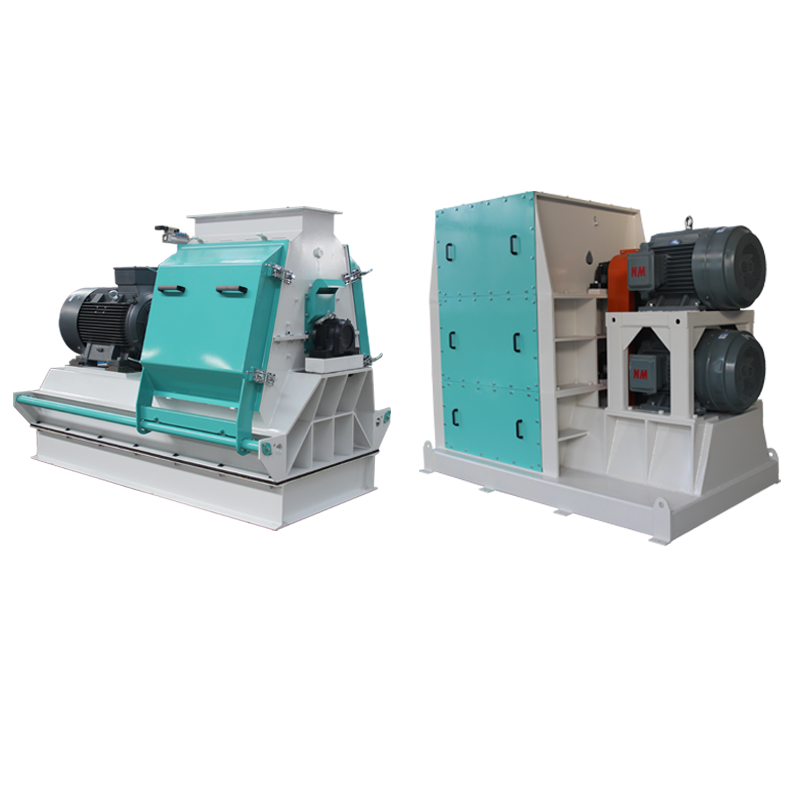
To choose the right feed hammer mill, first calculate the actual grinding demand in tonnes per hour, then match the required output with the material type, moisture content, target particle size and available operating time. Motor power should be evaluated using the specific energy required for the actual material and grinding conditions, rather than relying on a universal kW-per-tonne figure. For fibrous roughage such as alfalfa and straw, a dedicated pasture hammer mill may be more suitable than a conventional grain hammer mill.
1. Introduction: Why Correct Hammer Mill Sizing Matters
A feed hammer mill directly affects the grinding capacity, particle-size consistency and operating cost of a feed production line. If the selected machine is undersized, it may not supply enough ground material to the batching and mixing sections. This can interrupt production and reduce the overall utilization of downstream equipment.
An oversized hammer mill is not automatically a better choice. It may increase initial investment, require a larger motor and create unnecessary operating costs if the actual grinding demand is much lower than the machine's practical capacity.
The correct selection should therefore start with the production requirement and material characteristics, followed by capacity verification, power evaluation and equipment matching.
2. Understand the Material Before Selecting a Feed Hammer Mill
Different feed ingredients behave differently during grinding. A machine designed for granular materials may not provide the same feeding and grinding performance when processing long, fibrous roughage.
Before selecting a feed hammer mill, identify the following material characteristics:
|
Material factor |
Why it matters |
|
Material type |
Grain, forage and fibrous stalks require different grinding approaches. |
|
Moisture content |
Moisture can affect feeding, screen performance and material flow. |
|
Initial particle size |
Large or irregular material may require pre-cutting or size reduction. |
|
Fibre content |
Long fibres may require a machine designed for roughage processing. |
|
Target particle size |
The required fineness influences screen selection and practical throughput. |
|
Bulk density |
Density affects feeding stability and mass throughput. |
For example, corn and wheat are granular materials, while alfalfa, ryegrass and straw contain long fibres. YUDA's SFSP pasture hammer mill is specifically designed for straw and pasture materials such as alfalfa, licorice, ryegrass and plant stalks.
3. How to Calculate the Required Feed Hammer Mill Capacity
The required grinding capacity should be calculated from the actual amount of material that needs to be processed and the effective operating hours available.
A basic calculation is:
\[ Q=\frac{M}{H} \]
Where:
\(Q\) = required grinding capacity (t/h)
\(M\) = total material to be ground (t)
\(H\) = effective grinding time (h)
Example:
A feed plant needs to grind 48 tonnes of roughage per day. The hammer mill is scheduled to operate for 8 effective hours.
\[ Q=\frac{48}{8}=6\text{ t/h} \]
The preliminary grinding requirement is therefore 6 t/h.
However, the plant should also consider material changes, cleaning time, screen replacement, feeding interruptions and the operating capacity of the equipment before and after the mill. The final selection should be based on the required production schedule, not only the daily average.
4. SFSP68 Pasture Hammer Mill: Capacity and Power Options
For feed plants processing fibrous roughage, YUDA offers the SFSP series pasture hammer mill. The official product information lists a capacity range of 2–12 t/h, with single-motor and dual-motor configurations.
The published model information includes the following power and capacity combinations:
|
Configuration shown on product page |
Motor power (kW) |
Published capacity (t/h) |
|
Single-motor option 1 |
55 |
2–3 |
|
Single-motor option 2 |
75 |
3–4 |
|
Single-motor option 3 |
90 |
4–6 |
|
Single-motor option 4 |
110 |
5–8 |
|
Dual-motor option 1 |
2 × 55 |
4–6 |
|
Dual-motor option 2 |
2 × 75 |
5–8 |
|
Dual-motor option 3 |
2 × 90 |
8–12 |
Important model-table note: The official product page displays four model-family headings alongside seven power/capacity combinations. The table above therefore presents the published configurations without assigning each individual combination to a specific model heading where the page layout does not make that mapping unambiguous. Confirm the exact model designation and motor configuration with YUDA before quotation.
These figures are manufacturer-published reference data. Actual output may vary according to material condition, moisture, feeding method and operating conditions.
|
Model |
Power (KW) |
Capacity (T/H) |
Rotor diameter(MM)
|
Number of hammer blades |
|
SFSP68*108 |
55 |
2-3 |
φ680 |
80 |
|
75 |
3-4 |
|||
|
SFSP68*168 |
90 |
4-6 |
104 |
|
|
110 |
5-8 |
|||
|
SFSP68*108*2 |
55*2 |
4-6 |
φ680*2 |
80*2 |
|
75*2 |
5-8 |
|||
|
SFSP68*168*2 |
90*2 |
8-12 |
104*2 |
5. How to Estimate Feed Hammer Mill Motor Power
Motor power is closely related to grinding throughput and the energy required to reduce the material to the target particle size.
A preliminary engineering calculation can use:
\[ P=Q\times E \]
Where:
\(P\) = estimated power demand (kW)
\(Q\) = grinding throughput (t/h)
\(E\) = specific energy consumption (kWh/t)
For example, if a grinding process has a verified specific energy consumption of 12 kWh/t and the required throughput is 6 t/h:
\[ P=6\times12=72\text{ kW} \]
This gives a preliminary process-power estimate of 72 kW. It is not automatically the motor nameplate rating. The final motor selection must account for the actual drive arrangement, motor efficiency, starting conditions, load variation and the manufacturer's design.
The 12 kWh/t value in this example is hypothetical. It is not a published SFSP68 specification or a guaranteed YUDA energy-consumption figure. The actual specific energy must be obtained from a material test or verified operating data under comparable conditions.
6. Key Factors That Affect Actual Grinding Capacity
A hammer mill's published capacity should not be treated as a fixed output under all conditions. Several operating factors can change the actual throughput.
1. Material moisture
Moisture affects the flow and grinding behaviour of feed ingredients. For fibrous roughage, the moisture range and physical condition should be confirmed before the machine is selected.
2. Screen configuration and target fineness
The required particle size influences the screen configuration and grinding conditions. A finer target may require more intensive grinding and can reduce throughput. The correct screen should be selected according to the feed formulation and the intended use of the finished material.
3. Feeding stability
Uneven feeding can cause unstable motor loading and inconsistent output. The feeding system should supply material continuously and at a rate suitable for the mill.
4. Hammer and screen condition
Worn hammers and damaged or blocked screens can reduce grinding performance. Regular inspection and timely replacement of wearing parts help maintain stable operation.
5. Airflow and material discharge
The conveying and discharge arrangement should be designed to remove ground material effectively. The mill should be evaluated together with the feeder, discharge equipment and dust-collection system.
7. A Practical Feed Hammer Mill Selection Process
For a feed mill project, the following steps can help narrow down the appropriate machine configuration.
|
Step |
What to confirm |
Selection purpose |
|
1 |
Raw material and moisture |
Confirm machine suitability |
|
2 |
Daily grinding demand |
Establish production requirement |
|
3 |
Effective operating hours |
Calculate required t/h |
|
4 |
Target particle size |
Determine screen and process conditions |
|
5 |
Motor power and configuration |
Evaluate the drive requirement |
|
6 |
Feeding and discharge system |
Check line compatibility |
|
7 |
Supplier verification |
Confirm final model and performance |
Before requesting a quotation, prepare the following information:
Raw material name and physical condition
Moisture range
Initial material size
Required finished particle size
Required capacity in tonnes per hour
Daily operating hours
Single-machine or complete-line project requirement
Providing these details helps the manufacturer evaluate the actual process conditions rather than selecting a machine based only on a nominal capacity figure.
8. Common Mistakes in Hammer Mill Sizing and Power Selection
Several common mistakes can lead to an unsuitable hammer mill configuration:
Selecting a machine based only on its maximum published capacity.
Ignoring the differences between grain and fibrous roughage.
Assuming that motor power alone determines grinding output.
Using an unverified specific-energy value in power calculations.
Overlooking screen selection and target particle size.
Failing to coordinate the mill with feeding, conveying and dust-collection equipment.
A reliable selection requires the material, process requirement, capacity and power configuration to be evaluated together.
9. Application: When Should You Choose a Pasture Hammer Mill?
A dedicated pasture hammer mill should be considered when the feed plant regularly processes fibrous roughage rather than only conventional grain ingredients.
Typical applications include:
Alfalfa grinding for ruminant feed production
Straw and forage processing
Ryegrass and plant-stalk grinding
Roughage preparation for compound feed mixing
Livestock farms and pasture-processing facilities
The YUDA SFSP pasture hammer mill is designed for these fibrous materials. Its published features include a widened built-in rotor, ultra-thick wear-resistant hammers, imported bearings, a quick-opening inspection door and a split thickened screen.
These features are intended to support roughage grinding, convenient screen replacement and cleaning, and stable machine operation. The final configuration should still be confirmed against the customer's actual raw material and production target.
10. Conclusion: Select the Machine Based on Process Data
Choosing the right feed hammer mill requires more than comparing model numbers or motor ratings. A suitable machine must match the raw material, required grinding capacity, target particle size, operating schedule and complete production-line configuration.
For fibrous materials such as alfalfa and straw, the YUDA SFSP pasture hammer mill provides a dedicated grinding option with published capacity configurations from 2 to 12 t/h. However, the final model and motor arrangement should be confirmed using the customer's material information and actual process requirements.
A well-planned selection helps reduce production bottlenecks, avoid unnecessary equipment investment and support stable feed manufacturing.
11. Frequently Asked Questions (FAQ)
Q1: How do I calculate the required capacity of a feed hammer mill?
Calculate the total material that needs to be ground and divide it by the effective operating hours. For example, 48 tonnes of material processed in 8 effective hours requires an average grinding capacity of 6 t/h. The final selection should also consider operating interruptions and line compatibility.
Q2: What is the capacity range of the YUDA SFSP pasture hammer mill?
The official product information lists a capacity range of 2–12 t/h. The available configurations include single-motor and dual-motor options. Actual output depends on material and operating conditions.
Q3: How is hammer mill motor power estimated?
A preliminary estimate can use P = Q × E, where Q is throughput in t/h and E is specific energy consumption in kWh/t. The specific-energy value must be obtained from relevant material tests or verified operating data.
Q4: Is a pasture hammer mill suitable for corn and wheat?
The SFSP pasture hammer mill is specifically described for fibrous roughage such as alfalfa, licorice, ryegrass and straw. For conventional granular ingredients such as corn and wheat, compare the dedicated grain hammer mill range and confirm suitability with the manufacturer.
Q5: Does a finer grinding requirement affect hammer mill capacity?
Yes. A finer target particle size may require more intensive grinding and a different screen configuration, which can reduce practical throughput. The capacity should be verified under the intended screen and material conditions.
Q6: What information should I provide when requesting a hammer mill quotation?
Provide the raw material, moisture range, initial size, target particle size, required t/h capacity and daily operating hours. If the mill will be integrated into a complete production line, include the relevant upstream and downstream equipment information.
Written by: Yuda Machinery Engineering Team
Based on years of experience in feed machinery manufacturing, equipment design and overseas project installation.
Table of Contents
- 1. Introduction: Why Correct Hammer Mill Sizing Matters
- 2. Understand the Material Before Selecting a Feed Hammer Mill
- 3. How to Calculate the Required Feed Hammer Mill Capacity
- 4. SFSP68 Pasture Hammer Mill: Capacity and Power Options
- 5. How to Estimate Feed Hammer Mill Motor Power
- 6. Key Factors That Affect Actual Grinding Capacity
- 7. A Practical Feed Hammer Mill Selection Process
- 8. Common Mistakes in Hammer Mill Sizing and Power Selection
- 9. Application: When Should You Choose a Pasture Hammer Mill?
- 10. Conclusion: Select the Machine Based on Process Data
- 11. Frequently Asked Questions (FAQ)
