
 EN
EN


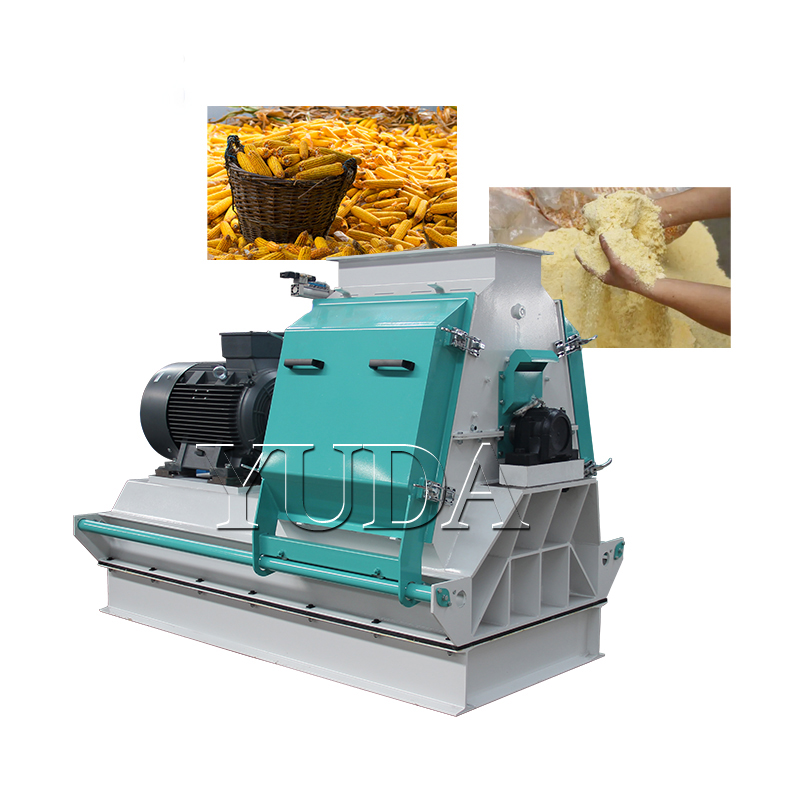
The efficiency of your corn hammer mill directly impacts feed production costs and throughput. If your goal is to maximize performance without purchasing a brand new hammer mill, there are several strategies to optimize your existing equipment. While some operators may obsess over horsepower, the most efficient mills are the result of a properly integrated system where rotor speed, air assistance, material flow and screen selection come together seamlessly. Shanghai Yuanyuda International Trade Co., Ltd. has supported thousands of feed manufacturers to optimize hammer mill operation and maximize throughput with the SFSP series of hammer mills. So if you want to improve your grinding efficiency without a large capital investment, here are four areas where you can make a real difference.
Select the Right Screen Size and Open Area
The screen is your biggest “control center” for determining both your particle size and your production rate. If your holes are too small, they’ll restrict material flow through the screen and force your hammer mill to re-grind material that is already ground and falling into the discharge-a total waste of energy and heat. If your holes are too large, on the other hand, your hammer mill may produce a coarse grind, and then you’ll be paying the additional cost of re-grinding the product. Selecting the ideal screen will give you the desired particle size at the highest throughput. Higher open area allows ground material to flow out of the mill quickly, which in turn, eases the burden on your rotor. When grinding dry corn, Shanghai Yuanyuda recommends selecting at least a 45% to 50% open area screen and then choosing a hole size according to your needs—2mm to 3mm for fine feed, or 4mm to 6mm for a more coarser grind. Look for damage: check daily for torn or clogged holes, as just a few small problems can significantly lower the effective open area and drastically reduce grinding efficiency.
Optimize Hammer Configuration and Tip Speed
The design and layout of your hammers — as well as their thickness and hardness — greatly determine the energy transfer efficiency between hammers and corn kernels. Too few hammers means each hammer must work harder—increasing stress, power consumption, and wear rate. Having too many hammers will create too much air resistance and reduce the clearance between the hammers and the screen-all of which can slow down product discharge. The optimal setup usually involves a number of hammers between four and six per row, depending on your design.
If you need finer particle size, a faster speed can be advantageous, but it will also increase energy consumption and heat production. If you are using Shanghai Yuanyuda’s SFSP series, you can choose among hardened hammers with a variety of edge profiles and work with our engineers to optimize hammer layout for your corn and moisture levels.
Control Feed Rate and Airflow Balance
Excess feed rate overloads the grinding chamber, clogs screen surfaces and drastically lowers discharge efficiency. In other words, pulverized material accumulates at the flow bottleneck. Conversely, feeding your mill too slow means that you’re not fully utilizing your hammer mill's rotor, and you're losing money in the form of wasted motor power per ton processed. Try to maintain a target of 85% to 95% amperage with a steady, consistent feed. Another critical and often overlooked adjustment is the balance of airflow. You want enough air in your hammer mill to sweep material through the screen, but you don’t want too much airflow will draw light fine particles away before full size reduction occurs. Adjusting your air intake damper can make a significant difference. When operating correctly, your hammer mill should demonstrate relatively low negative pressure over the screen, indicating an effective grinding and conveying balance.
Maintain Sharp Hammers and Proper Clearance
Worn-out or rounded hammer tips deliver poor crushing performance in your hammer mill. They crush corn kernels rather than shear them, generating excess fines and heat and raising power consumption. You’ll want to inspect hammer edges every day and rotate or replace them as soon as they start showing any wear. Check hammer tip-to-screen clearance daily, as well, as too much clearance means material can pass through without being impacted, and too little clearance means your hammers might contact your screens, causing damage. Generally, 6 mm to 12 mm (0.25 to 0.5 in) is suitable for most hammer mill and screen thickness combinations, depending on your hammer mill and screen thickness. For optimal operation of Shanghai Yuanyuda SFSP series hammer mills, The company supplies a full range of wear spare parts including hammers and screens and even a clearance gauge for quick critical gap measurement. This one simple adjustment will ensure that your hammer mill is doing as much efficient work per horsepower as possible.
There are plenty of ways to boost your corn hammer mill's efficiency, from the simple adjustments above to more complex strategies that involve upgrading components. These tactics may not require the purchase of a new piece of equipment, but they do demand consistency. The professionals at Shanghai Yuanyuda International Trade Co., Ltd. are happy to work with feed producers of all sizes to provide parts, guidance, and assistance to improve the output of their grinding operations and help reduce energy costs. Contact us today to learn more about what you can do to optimize your operation.
