
 EN
EN


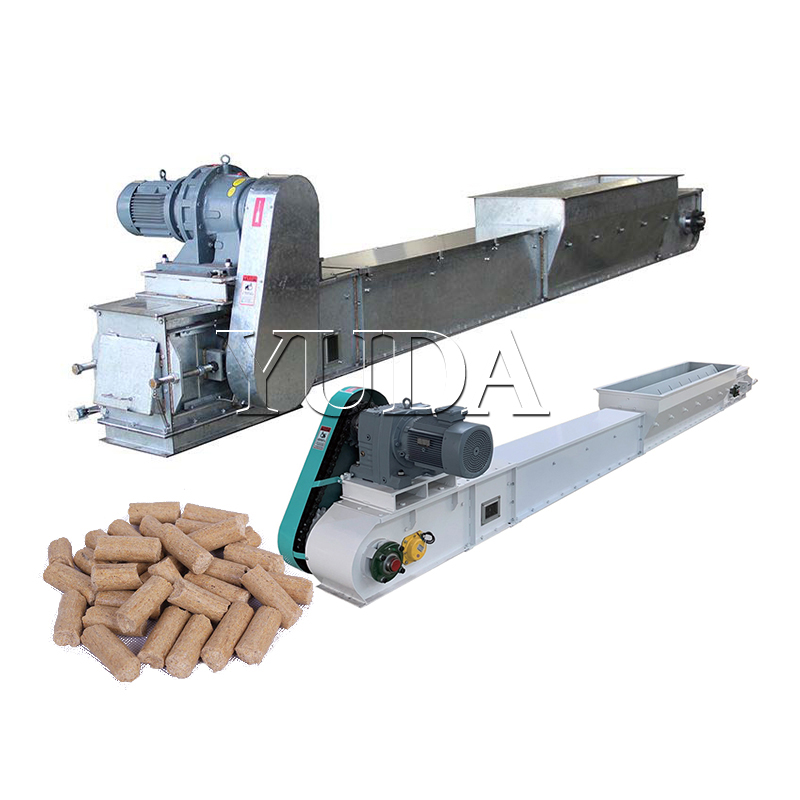
The right choice in chain conveyor capacity for any mill is incredibly important. Conveyors that are too small will result in bottlenecks and slow down production throughput. Conveyors that are too large, conversely, will be more expensive to purchase, install and run and may ultimately contribute to higher energy costs for a fixed production load. For mills that move material like animal feed, fertilizers or biomass, getting the right size involves a process of considering what your desired output is, the material characteristics and how it all fits together into the greater system. Shanghai Yuanyuda International Trade Co., Ltd. recognizes that this factor is critical to production efficiency and profit margins. Here is a process that you can follow to select the best size for your mill operation.
Define Your Target Throughput and Operational Schedule
Start with the target throughput and schedule of operation. For all production lines, engineers shall calculate the maximum projected TPH throughput, or TPH. You should include projected growth in your capacity estimate if necessary. Likewise, figure out the desired operating hours per day and if you will run in a batch operation, or a continuous one. A 20-ton-per-hour single-shift facility requires a different conveyor system than a 10-ton-per-hour 24-hour continuous production line. As a rule of thumb, allow for a 10% to 15% over -capacity margin. This provides room for normal variation and also for potential bursts in your input materials or output products. You’ll want to document both maximum, minimum and average hourly tonnage that needs to be moved before looking at any equipment specifications. Shanghai Yuanyuda International Trade Co., Ltd. recommends this step in the selection process.
Analyze Material Properties and Flow Characteristics
Not all material moves in a chain conveyor the same way. Your choice of capacity will depend on the nature of the material you will be moving including bulk density, moisture content, particle size and abrasiveness. A heavier material such as pellets will place higher load on the conveyor and require a heavier-duty chain than a light fluffy meal. Sticky materials that may stick to the bottom of the trough will effectively reduce the cross section, and thus require a larger conveyor for equivalent ton per hour, than free-flowing materials. Likewise, dust production or corrosive materials will also affect the required speed of your chain conveyor and construction of your trough. Matching conveyor design and size to material properties is just as critical as meeting the required TPH throughput.
Match Conveyor Speed with Fill Ratio for Optimal Efficiency
Ultimately the capacity of a chain conveyor is the result of trough cross section multiplied by fill ratio multiplied by speed of the chain. If you run the conveyor at too high a speed you’ll cause excess excessive chain wear on chains, sprockets and troughs, as well as extra power consumption. Conversely, if you run the system at too slow a speed and with a large trough, the material may begin to settle. Typically, a fill ratio of 60% to 75% delivers a good combination of smooth operation, efficiency and gentle product handling in the majority of feed or fertilizer applications. Lightweight materials will allow for higher speeds, but be careful when handling fragile products or pellets. Shanghai Yuanyuda International Trade Co., Ltd. provides complete performance curves for its TGSU and TGSS chain conveyor series so that you can view the relationship between fill, speed and TPH.
Evaluate System Integration and Future Flexibility
The conveyor does not operate in a vacuum; it is an integral component of the whole production line. Make sure that your desired capacity will work harmoniously with other equipment in the system, such as upstream crushers and mixers, or downstream screeners and storage. If your new conveyor has more capacity than your subsequent equipment, you’ll likely experience backups. If it is undersized, your line will not be able to keep up with output. Also, think about whether the system will be expected to process multiple product types or switch between various blends and raw materials. In that scenario, a system that is easily accessed for cleaning becomes much more important. Other system design elements that you should consider are the physical configuration of the line, including horizontal lengths, vertical elevation differences, and the quantity of inlets and outlets. The ability to expand the system later is something Shanghai Yuanyuda International Trade Co., Ltd. considers important when recommending a solution. They suggest looking for Conveyors that are too large, conversely, will be more expensive. Selection is not simple, but it can be broken down into several clear steps that will result in an efficient, long-lasting system. When you take the time to calculate throughput, determine material characteristics and consider your larger system, you can avoid unnecessary over or under expenditure. The TGSU and TGSS series of chain conveyors from Shanghai Yuanyuda International Trade Co., Ltd. are available in a wide variety of sizes and can be custom engineered to fit your needs. Contact them today to request an on-site analysis of your current system.
