
 EN
EN


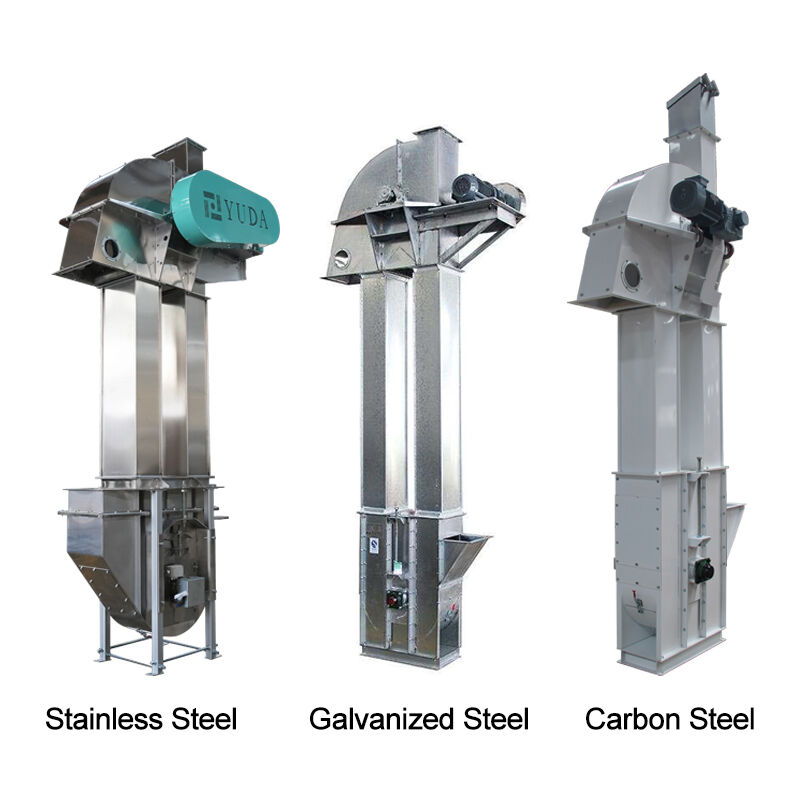
There are many cases where bucket elevators must transport materials vertically in a feed mill, a fertilizer plant or a grain processing plant. Use of the inappropriate type or design, however, can cause pellet cracks, kernel breakage and excess fines, reducing the product quality and wasting materials. Shanghai Yuanyuda International Trade Co., Ltd can help you protect material integrity and efficiently handle vertical conveying.
Understanding the Main Causes of Material Damage
A problem's reasons need to be known before a solution can be reached. Bucket elevators will damage the product at three specific places. They will damage it in the boot when they pick up product, in the head pulley when they dump the product, and in the bucket when they are loading and unloading it. A combination of forces: impact, compression, abrasion cause the product to degrade. It is important to determine which point in the whole process will degrade the product the most and that will tell you where you need to focus your efforts to prevent damage.
Control the Loading Method at the Boot Section
How your material flows into your bucket elevator is the best factor as far as end product quality is concerned. When material falls into the boot, hard impacts can fracture lightweight pellets and feed, such as aquatic feed. To avoid this, fit a controlled feeding device like a screw conveyor or belt conveyor that feeds material into the bucket line at a low rate. Further, decrease the height by which the chute drops between the feeding chute and the boot. Each inch of free fall adds force of impact. Modify the boot design so that buckets scoop material from a shallow layer, rather than allowing material to pile up and crush itself.
Optimize Bucket Filling and Discharge Speed
In centrifugal discharge elevators, the speed used is based on hurling material out of the buckets at the head pulley. But when the belt is too fast, there is an undue banging of the discharge chute by the pellets against it. A recommended belt speed of 1.4–2.0 m/s is sufficient to discharge without damage to most feed materials. Fragile products such as extruded aquatic feed or pet feed have better performance at slower speeds. Continuous discharge elevators are gentler but have lower capacity; they operate at slow speeds and rely on gravity to empty buckets. Adjust your speed settings in line with your production demands as well as your sensitivity to material.
Select the Right Bucket Shape and Material
All buckets are unable to process the materials in the same manner. Deep buckets will work with free flowing grains and enable delicate pellets to tumble and shred as they fill up. Shallow buckets offer a lighter handling as they reduce the amount of material that falls into each bucket. In case of delicate products, perforated buckets are recommended with the ability of letting air dissipate and support the load. Also note bucket edge design. Rounded leading edges will scoop more material compared with sharp edges. To limit the damage of friction, Shanghai Yuanyuda International Trade Co., Ltd. would recommend abrasion-resistant materials in the buckets with smooth interior surfaces to reduce friction damage.
Install Impact Absorption Features
Even with optimal loading there is an amount of impact. Insert impact protection or rubber liners in areas of concern within the elevator boot and discharge chute. These padded surfaces absorb the kinetic energy instead of directing this energy into your product. Use of rubber liners is especially useful in minimizing damages of fertilizer pellets, and organic fertilizer substances. In the case of the discharge chute, tilt the surface so that the material is sliding instead of falling. A cascade chute which has several stepped surfaces splits the fall into small, less damaging drops instead of the single, large-damaging drop.
Maintain Proper Belt Tension and Tracking
Loose belts lead to poor load distribution; some buckets may overflow while others run empty. of the head and tail and the deformation of buckets. Measure belt tension on a weekly basis based on specifications. Also, believe in tracking the belts to make sure that the buckets are in the center of the boot. Loose belts will lead to poor distribution of loads, some buckets may overflow and others empty. The buckets are accidentally filled, the contents overflow onto the bottom of the boot and are re-scooped and abused again and again. This fine-recycling is done away with by proper alignment.
Use Screening to Protect Finished Product Quality
Even if the elevator runs smoothly, there is still a possibility for products to get damaged. Screening is the final step in the process before the defective products are going to customers. For Screening method,we could use a rotary sifter or vibration sifter installed after the bucket elevator and it sifts out fine particles, broken pellets and good product separately. The screened material (defective products) can be sieved out through these screens before packaging and bulk shipping of the material. There is no wastage if the pure product (good product) goes through the customer without being spoiled and fines can be reworked in the pellet mill to decrease the wastage.
Regular Inspection of Wear Parts
The final defence against material damage is preventive maintenance. Worn belt surfaces cause vibration that shook the pellets apart in the buckets. The presence of loose or loose bolts and fasteners causes a latching of material. Check TDTG series bucket elevator parts frequently, such as the belt, buckets, boot pulley and head pulley. Shanghai Yuanyuda International Trade Co., Ltd. offers spare parts and accessories like clamps, spindles and hollow shafts to ensure you maintain your elevator in the best shape possible.
Table of Contents
- Understanding the Main Causes of Material Damage
- Control the Loading Method at the Boot Section
- Optimize Bucket Filling and Discharge Speed
- Select the Right Bucket Shape and Material
- Install Impact Absorption Features
- Maintain Proper Belt Tension and Tracking
- Use Screening to Protect Finished Product Quality
- Regular Inspection of Wear Parts